
Tarot online: every spread
Pick the spread that fits your question and draw the cards right here. Free, no sign-up. For today there is also the daily card.
For today
Short spreads for the day that is just starting.
Daily Reading
3 cards · How is my day going?
Daily Card for Love
1 card · What does my love life need today?
Daily Card for the Future
1 card · What is the day ahead bringing me?
Daily Yes-or-No Card
1 card · Yes or no — what is the card leaning toward today?
Aries Daily Card
1 card · What does today hold for Aries?
Taurus Daily Card
1 card · What does today hold for Taurus?
Gemini Daily Card
1 card · What does today hold for Gemini?
Cancer Daily Card
1 card · What does today hold for Cancer?
Leo Daily Card
1 card · What does today hold for Leo?
Virgo Daily Card
1 card · What does today hold for Virgo?
Libra Daily Card
1 card · What does today hold for Libra?
Scorpio Daily Card
1 card · What does today hold for Scorpio?
Sagittarius Daily Card
1 card · What does today hold for Sagittarius?
Capricorn Daily Card
1 card · What does today hold for Capricorn?
Aquarius Daily Card
1 card · What does today hold for Aquarius?
Pisces Daily Card
1 card · What does today hold for Pisces?
Love & relationships
For the question about you and another person.
Your life
From a quick overview to the Celtic Cross.
Career & money
For decisions about work, projects and money.
Inner work
Spreads that ask inward, not outward.
Mind, Body, Spirit
3 cards · Mind · Body · Spirit
Self Assessment and Advice
3 cards · Weaknesses · Strengths · Advice
Dream Interpretation
3 cards · Origin · Message · Waking Life
Maslow's Hierarchy of Needs
5 cards
Self Love
6 cards
Jungian Archetypes
5 cards
Dream Mirror
7 cards
Self Growth
10 cards
The Fool
6 cards
The Magician
7 cards
The High Priestess
6 cards
The Empress
4 cards · Give · Keep · Nurture · Pull Back
The Emperor
6 cards
The Hierophant
5 cards
The Lovers
10 cards
The Chariot
6 cards
Strength
6 cards
The Hermit
4 cards · Dark · Persona · True Self · Guiding Light
The Wheel of Fortune
6 cards
Justice
9 cards
The Hanged Man
5 cards
Death
7 cards
Temperance
7 cards
Devil
8 cards
Tower
7 cards
Star
6 cards
Moon
6 cards
Sun
5 cards
Judgement
6 cards
World
5 cards
Zodiac Spread - Inner World
12 cards
Moon phases
A spread for every phase of the moon.
Astrology & Lenormand
Where tarot meets planets, houses and Lenormand.
Daily card for your sign
Get today’s card read for your zodiac sign — or pick a theme.
Tarot spreads by number of cards
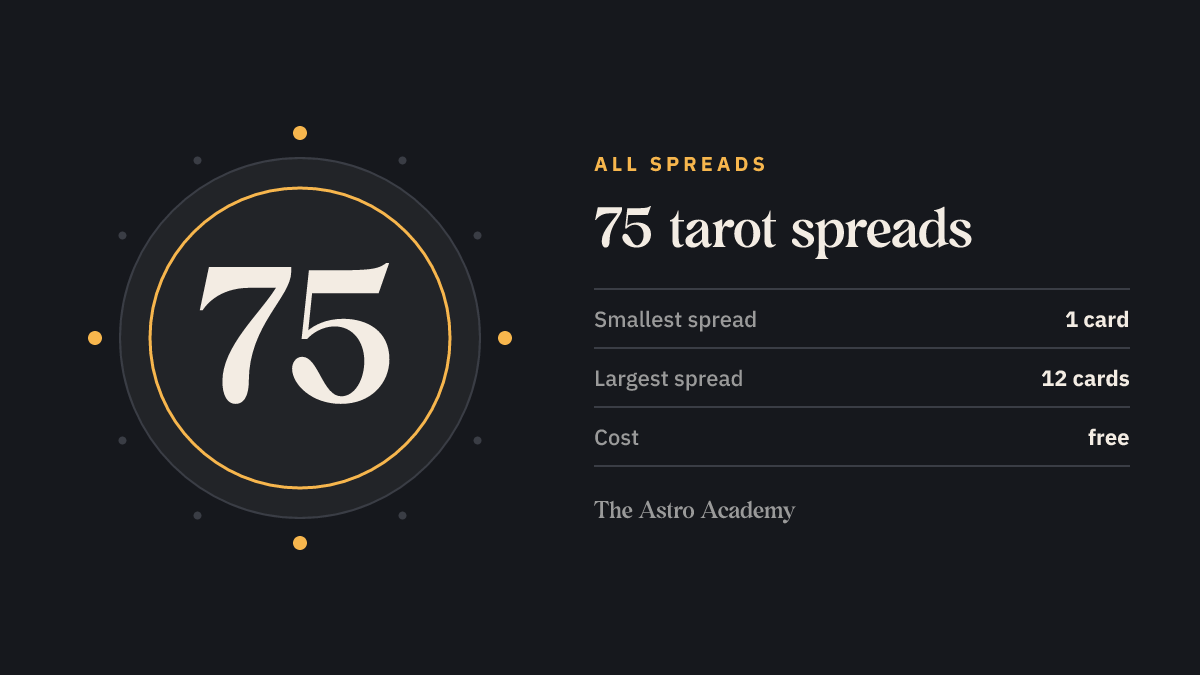
There are 75 spreads here, from one card up to 12. The more cards, the more layers the answer has — and the more time it takes to read. One to three cards are plenty to start with.
| Size | Spreads | Good for | Examples |
|---|---|---|---|
| 1 card | 16 | one question, one nudge for the day | Daily Card for Love, Daily Card for the Future, Daily Yes-or-No Card |
| 2–3 cards | 11 | developments and simple comparisons | Daily Reading, Past, Present, Future, Situation, Action, Outcome |
| 4–6 cards | 32 | relationships, career, moon phases | Shooting Forward, Work Problems, Turbulent Finances |
| 7–9 cards | 11 | layered questions with several levels | Compatibility Spread, Broken Heart, Dream Mirror |
| 10 cards or more | 5 | big life questions and zodiac spreads | Celtic Cross, Self Growth, The Lovers |
78 cards. One language.
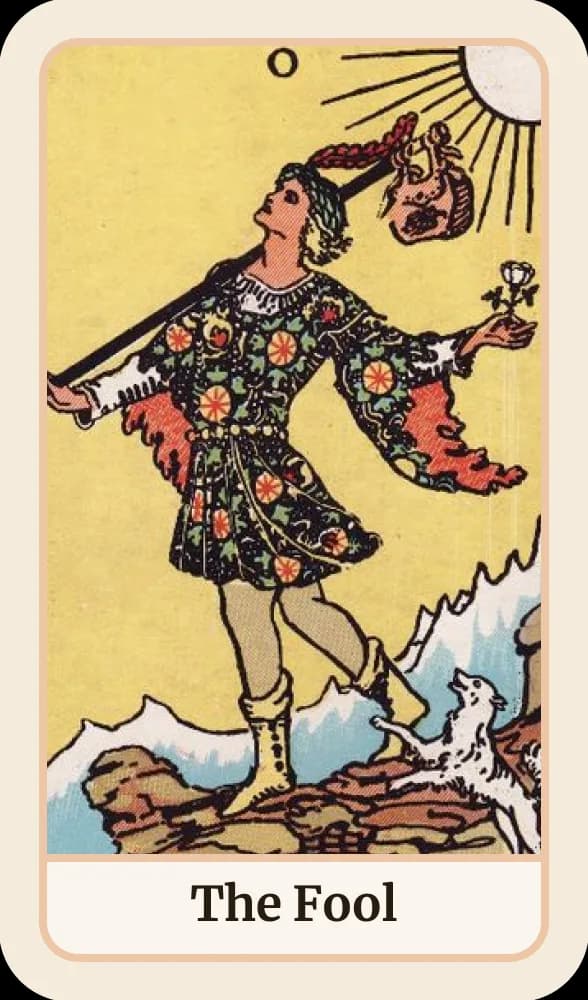
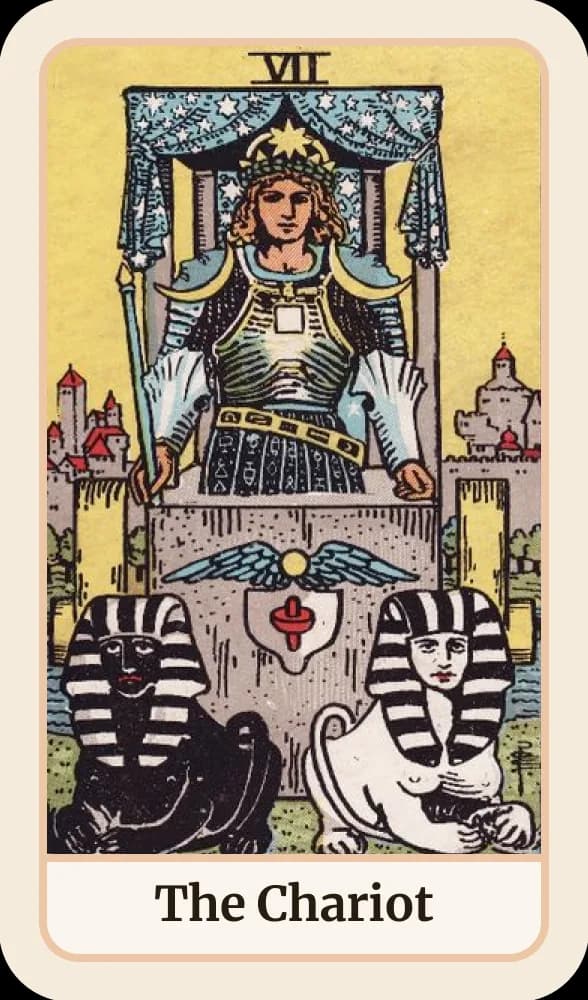
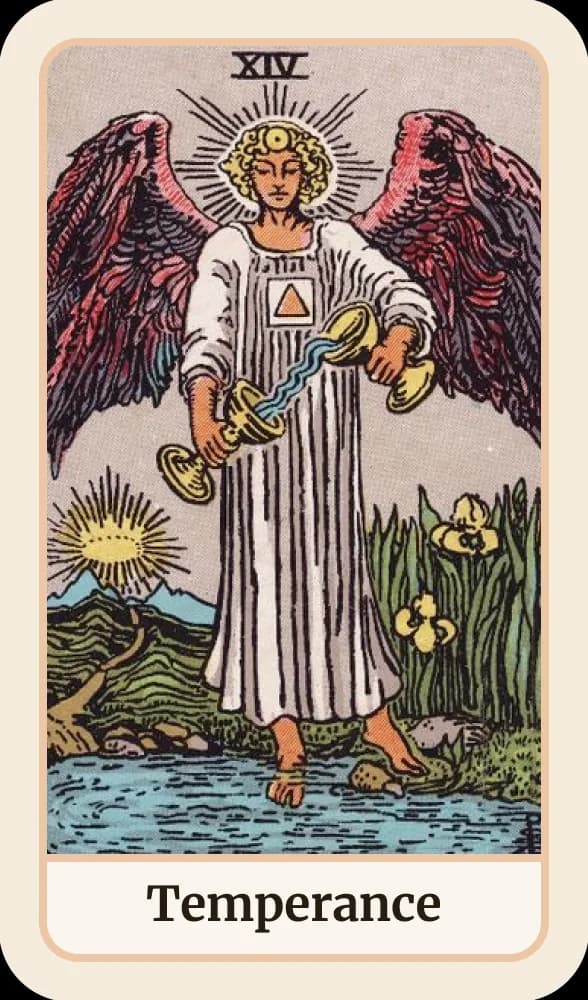
Tarot is not fortune-telling. It is a mirror that asks you questions you would not ask yourself. 22 major cards show life themes, 56 minor cards show everyday situations. Together they form a language for thinking about your life.
Which tarot spread fits your question?
Tarot spreads are the layouts you draw and read cards into. Each position has a fixed meaning — the card that lands there gets a clear context through that position. That's the whole difference between "I draw a card" (useful, but limited) and "I lay a tarot reading" (one question broken into several interwoven answers).
The most important spreads
Daily card — one card, one question, one minute. The most honest starting point for anyone serious about learning tarot. One card a day for 30 days and you know the 30 most important cards well.
Three-card spread — past, present, future. The simplest "big" tarot spread. Works for almost any open question, from "where do I stand in this conflict?" to "what's coming towards me?".
Situation–action–outcome — the decision variant of the three-card spread. You see the situation, what you can do, what likely comes of it. We recommend it for any "A or B" question.
Celtic Cross — ten cards, the classic for complex life situations. Past, present, obstacle, what stands above you, what lies below, near and far goal. Don't ask the Celtic Cross of yourself before you know the 78 cards well — otherwise you sit in front of ten cards without footing.
Relationship spreads — three to seven cards that make the dynamic between two people visible. You, them, the energy between you. For deeper questions (values, longings, overlap) the seven-card compatibility spread is more honest than the three-card short version.
How to choose the right tarot spread
One question, one spread. Frame the question as precisely as you can, then pick the spread to match — not the other way around. Three rules of thumb:
- Relationship questions → tarot reading for love.
- First tarot steps → tarot reading for beginners.
- "Where is this heading?" / weekly outlook → tarot reading for the future.
- "Stay or go?" / "A or B?" → tarot reading for decisions.
How to read a tarot spread
Three steps, always in this order: first read the position — what does it mean in this spread? Then the card — what is its core theme? Then combine position + card — what does this card AT THIS POSITION say about your question? With us you get a full interpretation for every card on every position — no rote memorisation, you read along.
Frequently asked questions
What is a tarot spread?
A tarot spread is a structured layout you draw and read cards into. Each position in the spread has a fixed meaning ("past", "obstacle", "outcome") — the card that lands there gets a clear context through that position. Best-known spreads are the daily card (1 card), the three-card spread (past-present-future) and the Celtic Cross (10 cards for complex questions).
How many tarot spreads are there?
There are literally hundreds of tarot spreads — every school and teacher has their own variants. In Astro Academy we've curated over 60, from the simple daily card to the elaborate ten-card Celtic Cross. We group them by question type — love, decision, future, beginner — so you don't drown in the index.
Which tarot spread is best?
The best spread is the one that fits your question. The three-card spread is great for open questions, the Celtic Cross for complex life situations, love spreads for relationship questions. We recommend beginners start with the daily card — one card in the morning, one question. After 30 days you have a feel for the 78 cards and can move into more complex spreads on your own.
How do I read a tarot reading?
Three steps: (1) Read the position. What does it mean in this spread — "what you don't see", "where the outcome leads". (2) Read the card. What is its core theme — the Fool = beginning, Death = change, the Lovers = choice. (3) Combine position + card. What does this card AT THIS POSITION in this spread say about your question? With us you get a full interpretation for every card on every position — no rote memorisation.
Do I need prior knowledge to do a tarot reading?
No. Every spread in Astro Academy comes with a full interpretation for every card on every position. You draw, we read — and you learn naturally what the cards mean in which context. If you want to learn it more systematically, you can take the 30-day tarot path: 5 minutes a day to read all 78 cards with confidence.
Are the tarot readings free?
Yes. Every one of our 60+ spreads is free to play, no sign-up. You get a plain-language interpretation for every card on every position. If you want to go deeper and learn all 78 cards systematically, the 30-day tarot path is available as a Pro option — but the readings themselves cost you nothing.
 Reviewed by Alice Grist · Tarot Author & Reader