
Rauhnacht card · #16 / 36
The Bread: Rauhnacht card meaning
- nourishment
- gratitude
- abundance
- sharing
- simplicity

Video · 40 seconds
The Answer in Simplicity
The Bread card is a reminder of gratitude and the joy of sharing. It represents the simple, fundamental things that truly nourish our lives. Calculate it for free: theastroacademy.com
Read along
What if you already have everything you truly need, right in your hands? The Rauhnacht card 'The Bread' speaks to exactly this feeling. It's about the essentials. Picture a table with a freshly baked loaf. There is enough for everyone to share. This is an invitation to feel grateful for what truly nourishes you. This could be a warm conversation. Or a simple meal you share with someone. Check in with yourself: What is the 'daily bread' that sustains you today? Find the meaning of all the cards for free at theastroacademy.com.
Contents
The Bread in one sentence
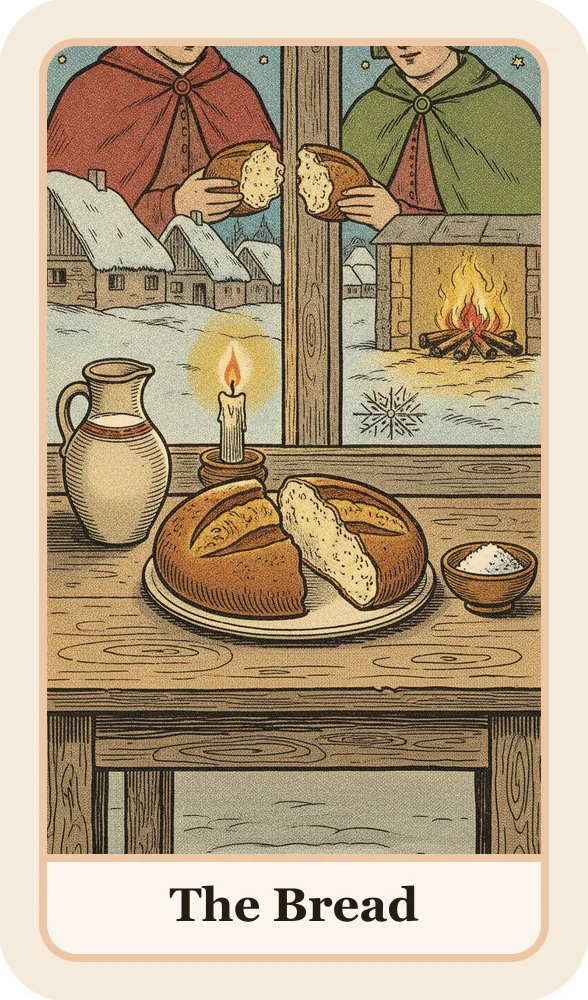
The Bread represents nourishment, gratitude, and the abundance found in simple things. It speaks of having enough, sharing with others, and appreciating the fundamental elements that sustain you.
| Feature | The Bread |
|---|---|
| Number | 16 of 36 |
| Keywords | nourishment, gratitude, abundance, sharing, simplicity |
| Yes or no | leaning yes |
| In love | In a relationship context, The Bread points to the simple, daily acts of care that sustain a partnership. |
| Work & money | For work and finances, The Bread is a sign of having enough to meet your needs. |
| Question for you | For what simple, fundamental things in your life can you feel grateful today? |
What the card shows
Bread is a staple food in many cultures, a symbol of basic sustenance and life itself. The broken loaf on the card suggests sharing, community, and the idea that there is enough to go around. This card brings your attention to the simple, foundational things in your life that nourish you, whether physically, emotionally, or spiritually. It is a reminder of daily abundance and a prompt to feel grateful for what you have right now.
This theme can be about appreciating a simple, home-cooked meal, the comfort of a steady friendship, or the security of your daily routine. It is about recognizing that you have what you need. The Bread asks you to look past complex desires and see the value in the basics. For you, what is the 'daily bread' that sustains you in your current life?
To connect with this card's message, you could practice simple gratitude. Before your next meal, take a moment to think about where the food came from and appreciate the nourishment it provides. Or you could share something simple with someone else, like a phone call or a helping hand.
Love, work and money
In love
In a relationship context, The Bread points to the simple, daily acts of care that sustain a partnership. It is about shared meals, mutual support, and the comfort of just being together. It suggests appreciating the foundational goodness of your connection. What simple act of kindness could you share with your partner today?
Tip: The Bread stands for sharing and gratitude. Share something consciously with someone dear to you today, a meal, a story, your time. And say what you are grateful for as you do.
Work & money
For work and finances, The Bread is a sign of having enough to meet your needs. It encourages a sense of security and gratitude for your current income or job, rather than striving for more. It can also point to the satisfaction found in simple, honest work that provides a tangible result.
Tip: The Bread reminds you of the basics. Write down which simple things carry your work: sleep, breaks, a good team, a routine. Which foundation would you like to tend better in the new year?
Does The Bread say yes or no?
Leaning yes. The Bread symbolizes abundance, satisfaction, and having one's basic needs met. This sense of fundamental well-being and simple positivity points to a 'yes'.
What the card advises
Share something today. It doesn't have to be big; you could share a story, a compliment, or a piece of fruit with a friend or coworker.
For what simple, fundamental things in your life can you feel grateful today?
How often does a given card turn up in “daily spread”?
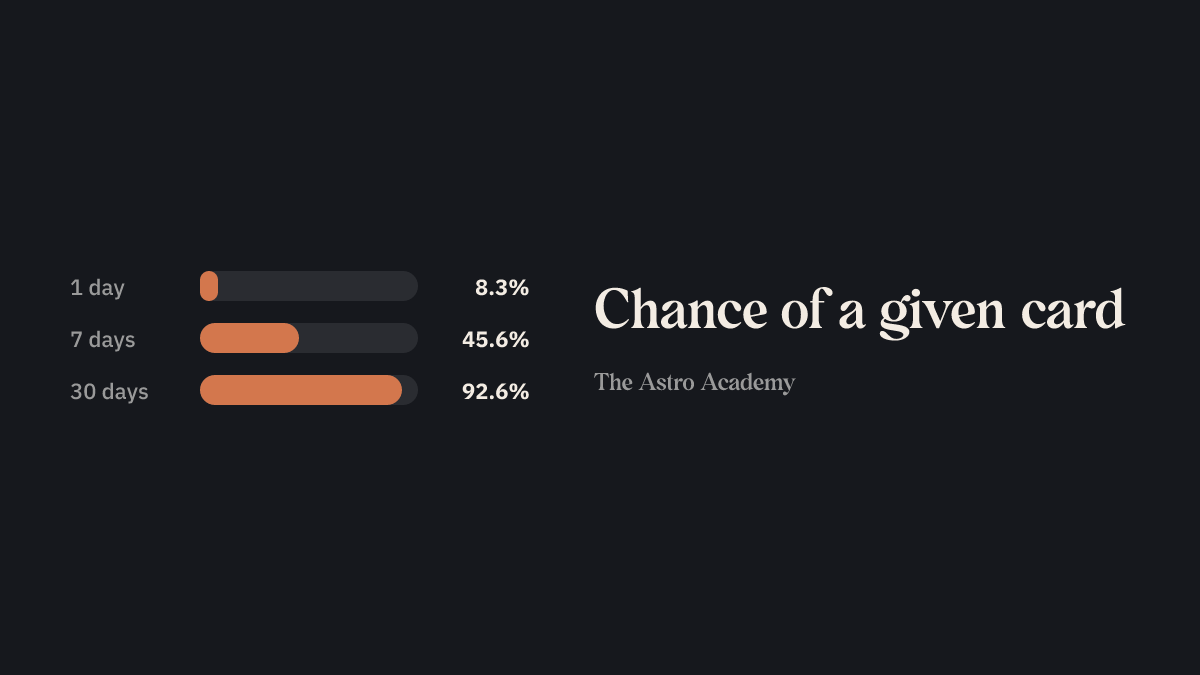
With 3 cards out of 36 Rauhnächte cards, every single card is in your spread with 8.3 %. Lay it every day for a week and a given card shows up at least once with 45.6 %, within a month with 92.6 %.
Until you have seen each of the 36 cards at least once takes 49 days on average. The last missing cards take the longest, because fewer new ones are left each day.
| Case | Value |
|---|---|
| Cards in the deck | 36 |
| Cards in the spread | 3 |
| Chance per card and spread | 8.3 % |
| At least once in 7 days | 45.6 % |
| At least once in 30 days | 92.6 % |
| Two given cards on consecutive places | 0.32 % |
| Days until every card was laid once (mean) | 49 |
Pure probability: every card equally likely, every spread freshly shuffled, no card twice in one spread. The mean until every card was laid is computed exactly over all intermediate states.
In the big spread with all 36 cards, The Bread is always there. The chance it lies in the top row is 25.0 %, that it lands exactly on its own house 16 2.78 %.
Read by me
Is The Bread in your spread? I read it for you.
To Theresa’s readingFrequently asked questions
- What if I'm worried about money and I draw The Bread card?
- When drawn during financial worries, The Bread is a reassuring card. It asks you to shift your focus to what you do have, rather than what you lack. It suggests that your basic needs are, or will be, met and encourages trust in this fundamental security.
- Does The Bread always mean material abundance?
- Not exclusively. While it can point to material sufficiency, its meaning is broader. It also represents emotional and spiritual nourishment, like the support of friends, the joy of community, or a sense of inner peace.
- How is The Bread different from The Hearth?
- While both cards touch on comfort, The Hearth is about the safety and security of a place or community. The Bread focuses more on the actual substance that nourishes you and the acts of gratitude and sharing that come from having enough. The Hearth is the 'where,' and The Bread is the 'what.'