
Kipper daily spread
Focus on your question and draw all three cards.
3 cards to go.

Video · 38 seconds
Kipper Cards Made Simple
Kipper cards don't use abstract symbols. Instead, they show you real people and everyday situations. A tiny detail like which way a person is looking can change the whole reading, turning the cards into a map of your social life. Calculate it for free: theastroacademy.com
Read along
Where a person on a card looks can change its entire meaning. This is what makes Kipper cards special. They're a German deck that shows real people and situations. Think of the cards like a map of your social life. Your own card is the main person at the centre. Cards right next to yours are about things happening now. If a person on a card looks at you, they are involved. What's behind a person, you might be leaving behind. This is an invitation to see your relationships from a new angle. See for yourself if this feels true for you. Get your free daily reading at theastroacademy.com.
Kipper cards: a practical German deck
This page gives you a free Kipper card reading to show you a bit about your day. Kipper cards are a German fortune-telling system from the 1800s. They're very direct and practical. The 36 cards show people and situations from everyday life, so they're pretty easy to understand.
Contents
Your free reading for today
The free Kipper card reading at the top of this page pulls three cards for you. The first spot, "What awaits you," often points to a theme or event for the day.
The second card, "Who plays a part," usually shows a person or an influence. The last card, "How it turns out," suggests a possible outcome or feeling linked to the situation. When you look at your three cards, think of them as a short story.
The pictures are meant to be read pretty literally. If a person card comes up, ask yourself if someone you know comes to mind. If an event card like Meeting shows up, you can think about where a similar situation might pop up in your day.
| Spot | Meaning |
|---|---|
| What awaits you | theme or event for the day |
| Who plays a part | person or an influence |
| How it turns out | possible outcome or feeling |

A German deck from the 19th century
Kipper cards are a deck of 36 fortune-telling cards that first appeared in Germany around 1890. People debate where the name came from, but the deck's style is super clear.
The pictures show scenes and people from middle-class life back then, like a courtroom (Court case), a living room (Living room), or a man at his desk (Work). Tarot uses a lot of symbols, but Kipper is very down-to-earth and about specific situations. These cards often point to real events, people you might run into, or places you might go. This makes them especially good for questions about practical, everyday stuff.
If you know Lenormand cards, you'll see some similarities, since both are small decks that aren't Tarot. But Kipper has way more person cards, which really puts the focus on relationships and social interactions. Lenormand usually mixes symbols, while Kipper cards often tell a story more directly through the scenes they show.
How to read who is involved
The Main Person (male) and Main Person (female) cards are key to the deck. When you ask a question, one of these usually stands for you.
All the other cards in a spread are then read in connection to this main person card, which creates a map of your situation. How far apart the cards are is a big deal in a reading.
- Cards right next: Cards right next to your main person card suggest things that are close, happening now, or important.
- Cards farther away: Cards that are farther away can point to things in the future, in the past, or things that aren't as important right now.
- Pay attention: Many of the figures on Kipper cards look in a specific direction. Pay attention to where a person is looking.
- Figure looking toward: A figure looking toward your main person card can show an influence coming your way or someone focused on you.
- Figure looking away: A figure looking away might mean something is leaving, being ignored, or isn't a main part of the current picture.
The meaning of the Journey card
The card called Journey is a great example of how practical Kipper is. It usually points to actual travel, a move, or a vehicle. This could be a short trip to another town or changing where you live.
- Cards around it: The cards around it give more context, showing what the travel is about or where it goes.
- Other card systems: Other card systems might use a card like this to mean a symbolic path, but Kipper usually stays very concrete.
- Journey card: The Journey card almost always means moving physically from one place to another.
- Personal growth: If you're looking into personal growth, other cards in the deck fit better.
Which deck suits your question?
You can lay all five decks here for free. They differ in how many cards they have and in how you read them.
| Deck | Cards | Spreads | Typical |
|---|---|---|---|
| Oracle | 40 | 5 | angel cards with one message each, no fixed rules |
| Lenormand | 36 | 8 | plain everyday images, two neighbouring cards make one statement |
| Rauhnächte | 36 | 6 | cards for the twelve nights between the years |
| Kipper cards | 36 | 6 | people and everyday situations, the direction of a gaze counts too |
| Tarot | 78 | over 70 | 22 Major and 56 Minor Arcana, big themes and everyday life |
Popular spreads
A spread for every question.
Kipper card of the day
1 card · One Kipper card for today.
Three-card Kipper reading
3 cards · What was, what is, what comes.
Kipper love spread
5 cards · Five cards for you, the other person and your bond.
Kipper cards for work and money
3 cards · Three cards for work, people at work and money.
Nine-card Kipper spread
9 cards · Nine cards in a square: the setting of your question.
Kipper grand tableau
36 cards · All 36 cards in four rows around your main person.
All 36 Kipper cards
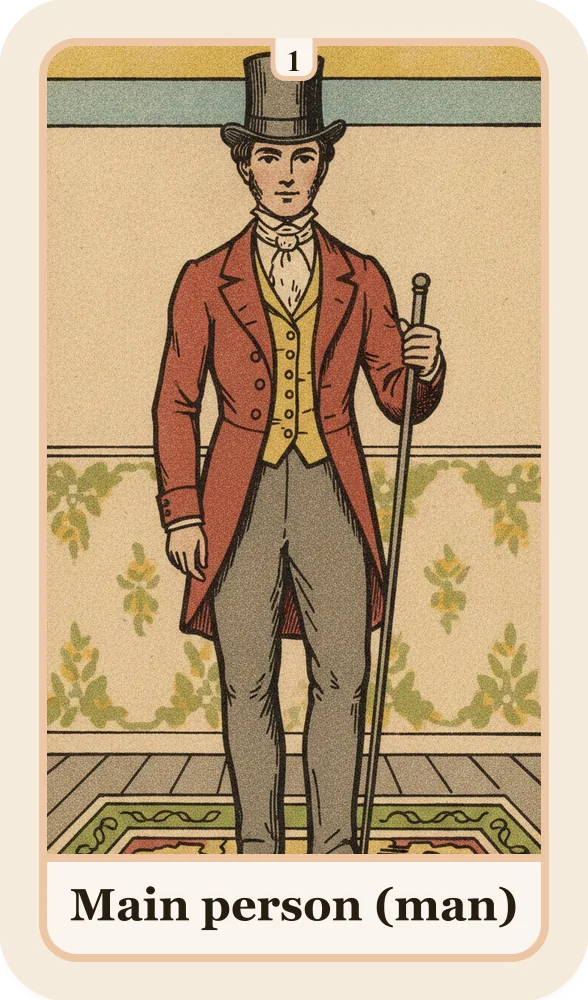 Main person (man)
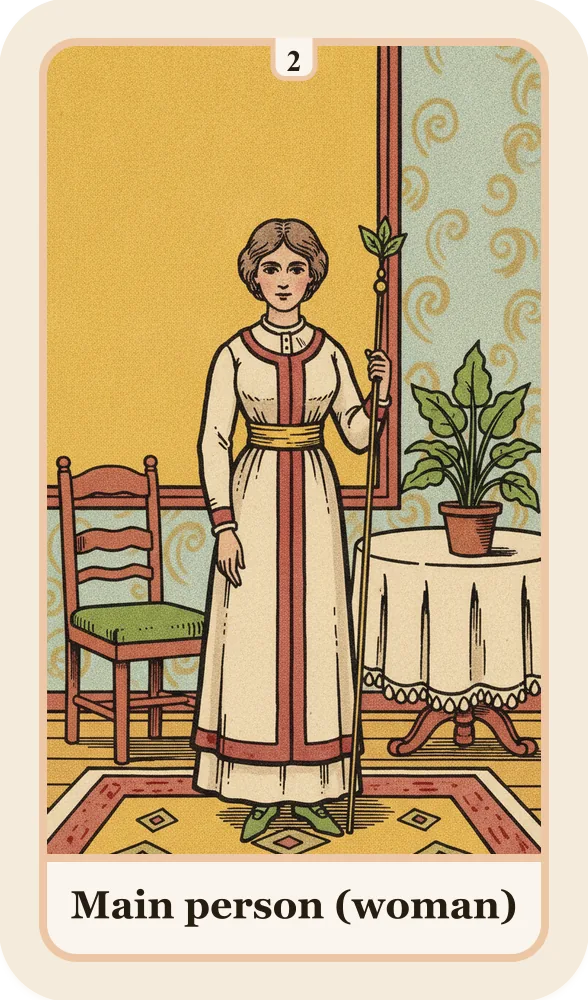 Main person (woman)
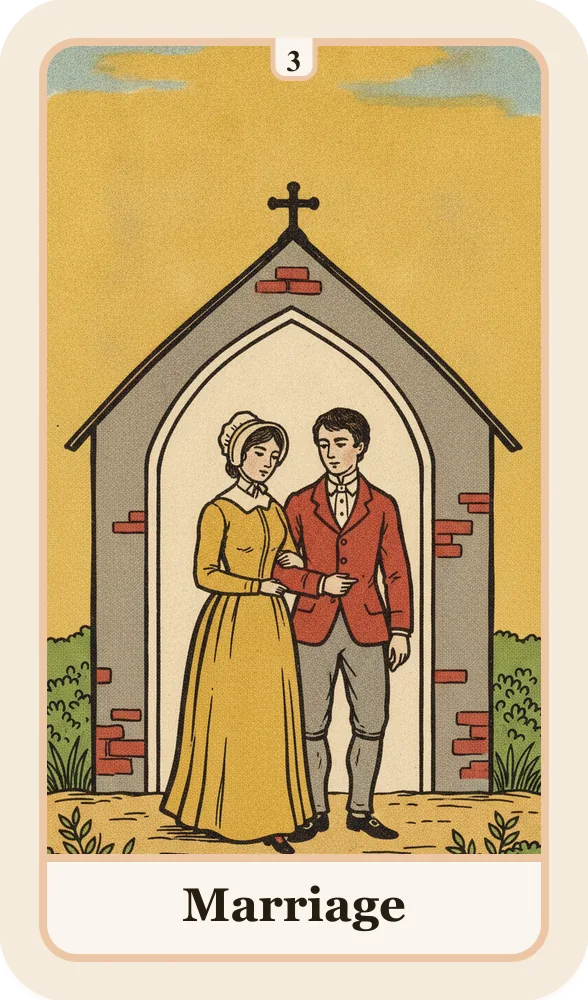 Marriage
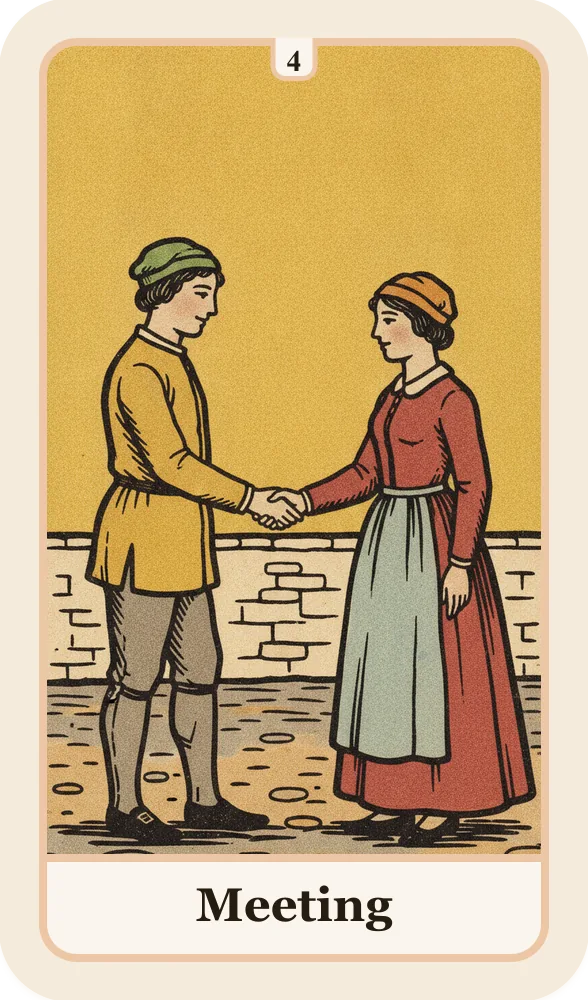 Meeting
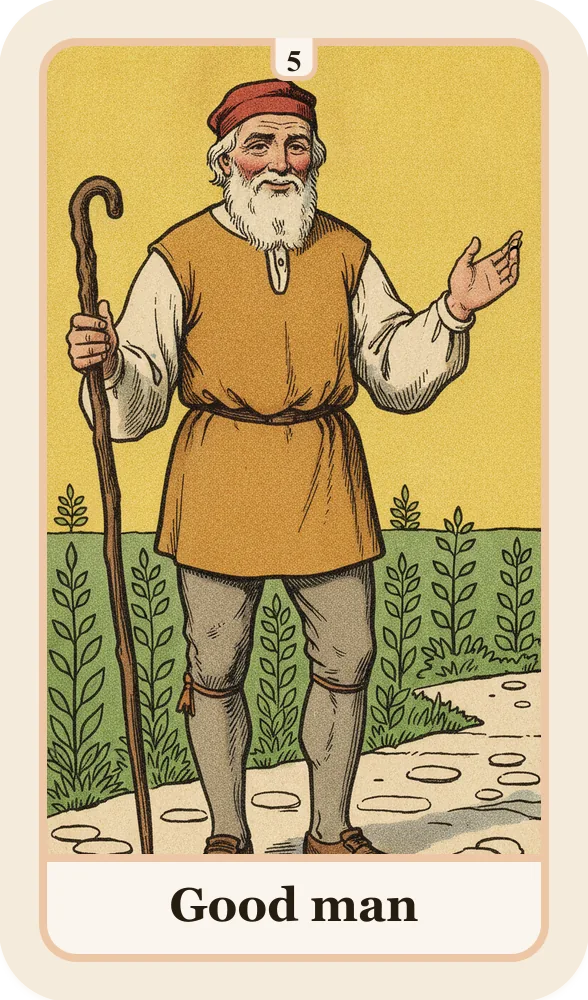 Good man
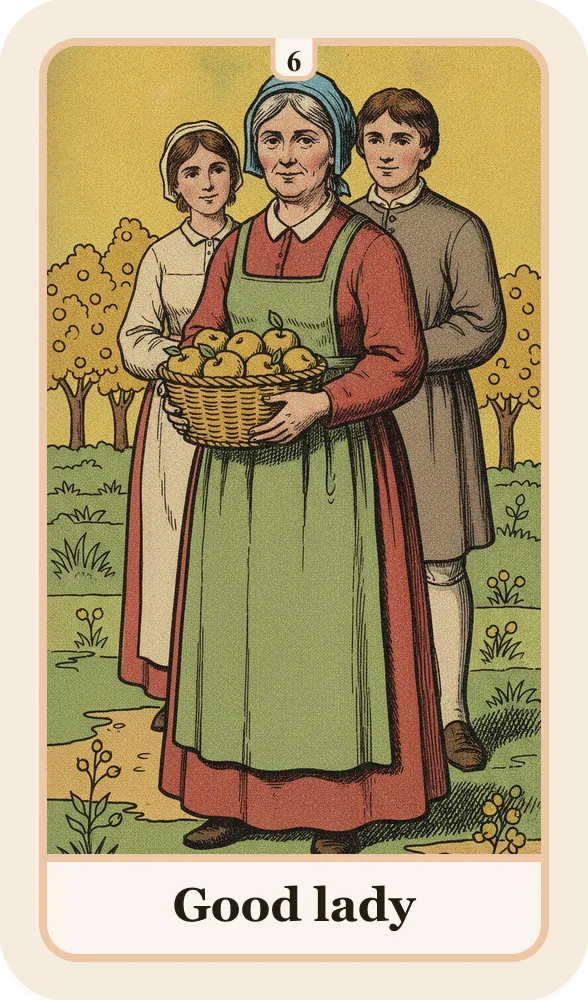 Good lady
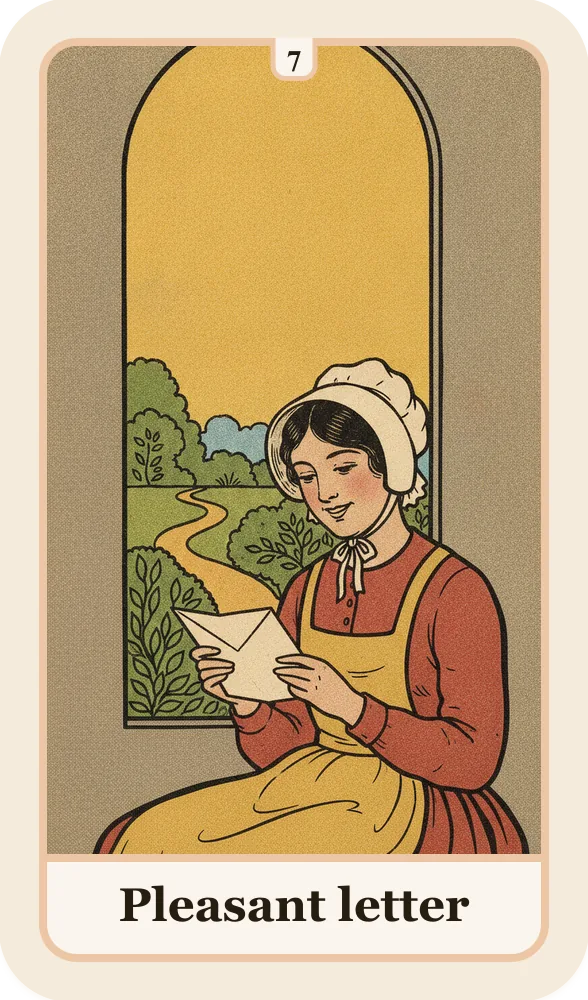 Pleasant letter
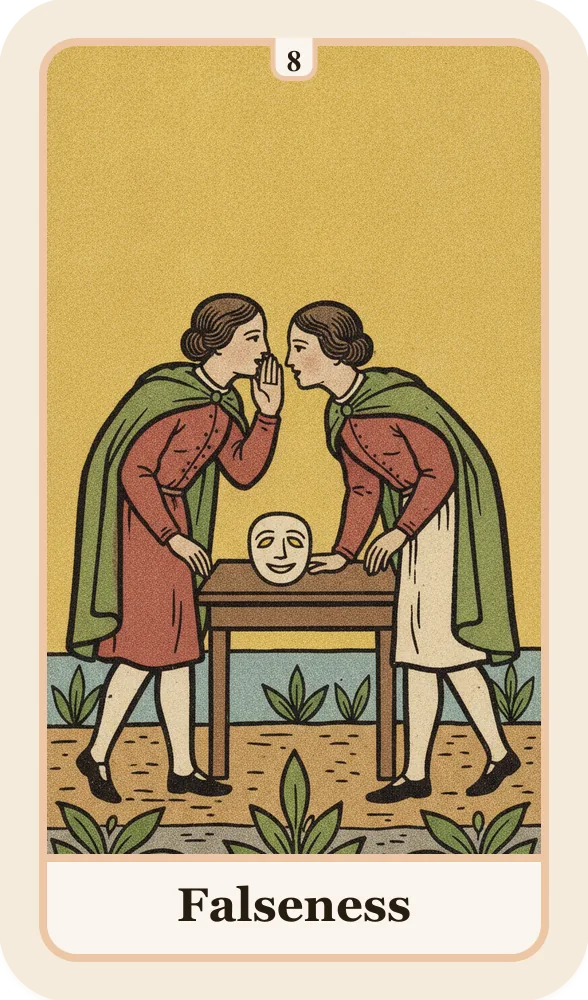 Falseness
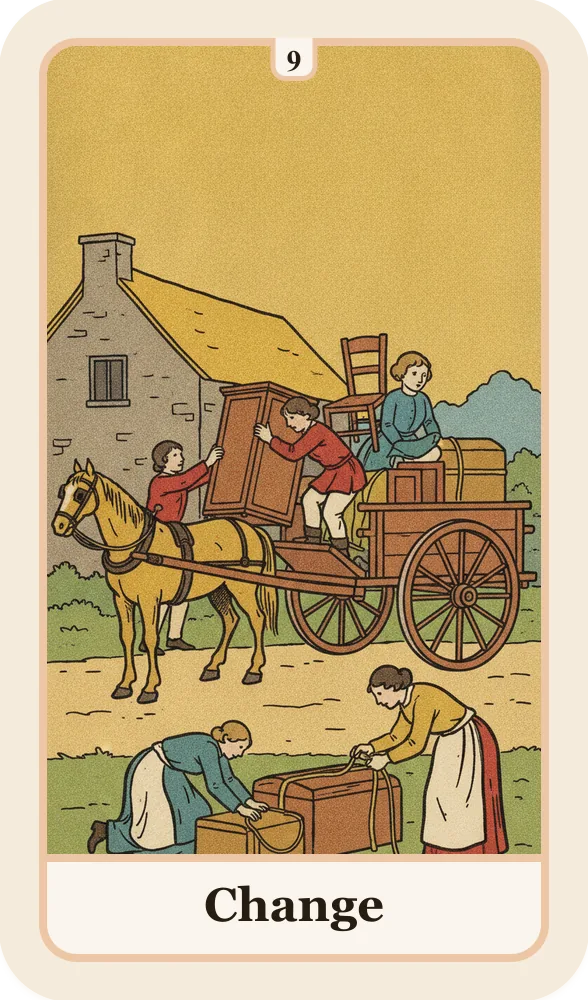 Change
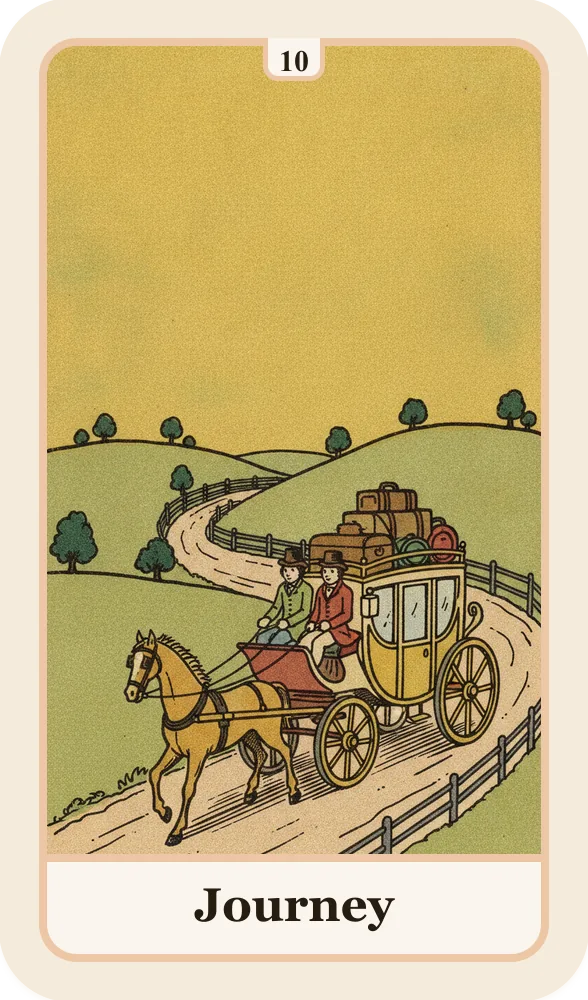 Journey
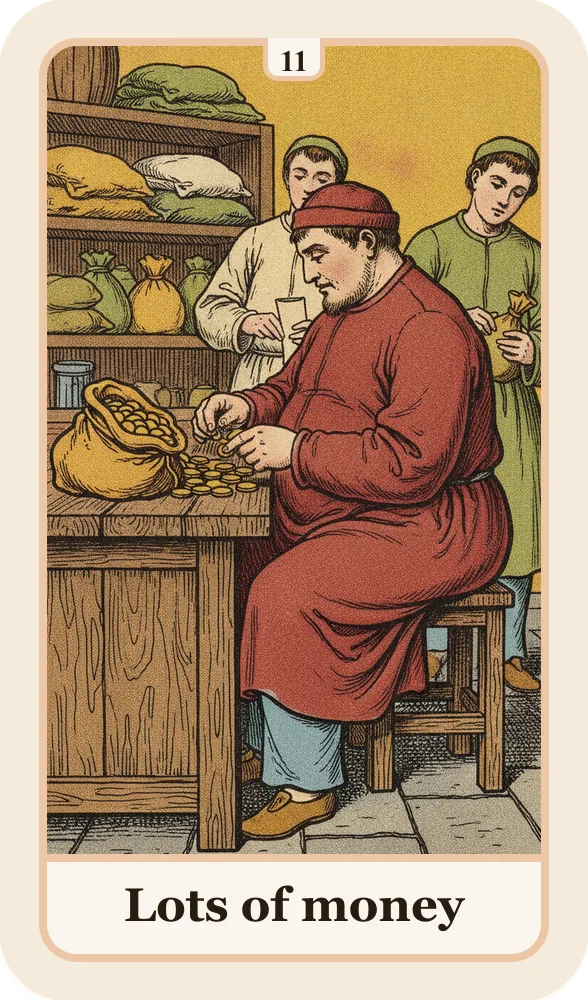 Lots of money
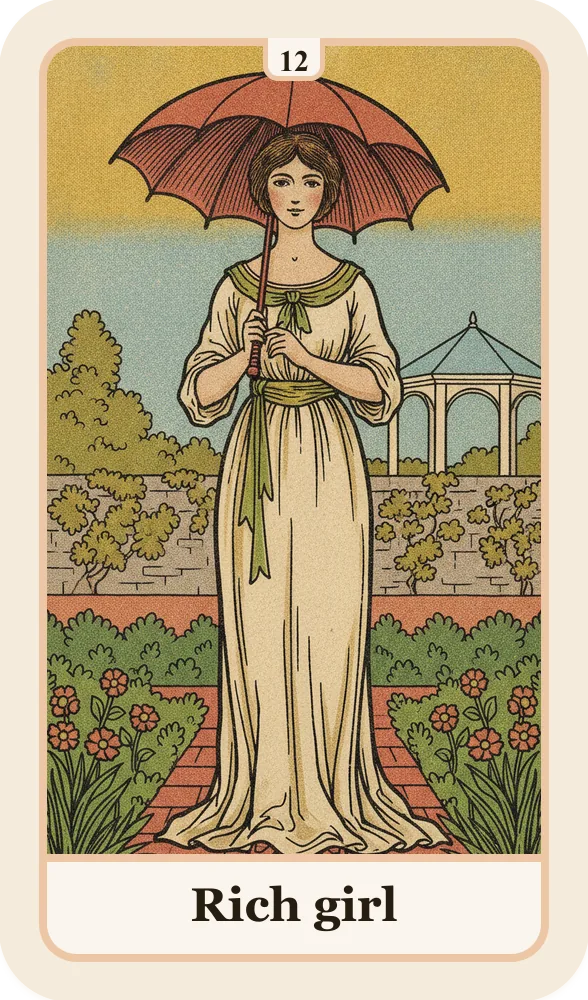 Rich girl
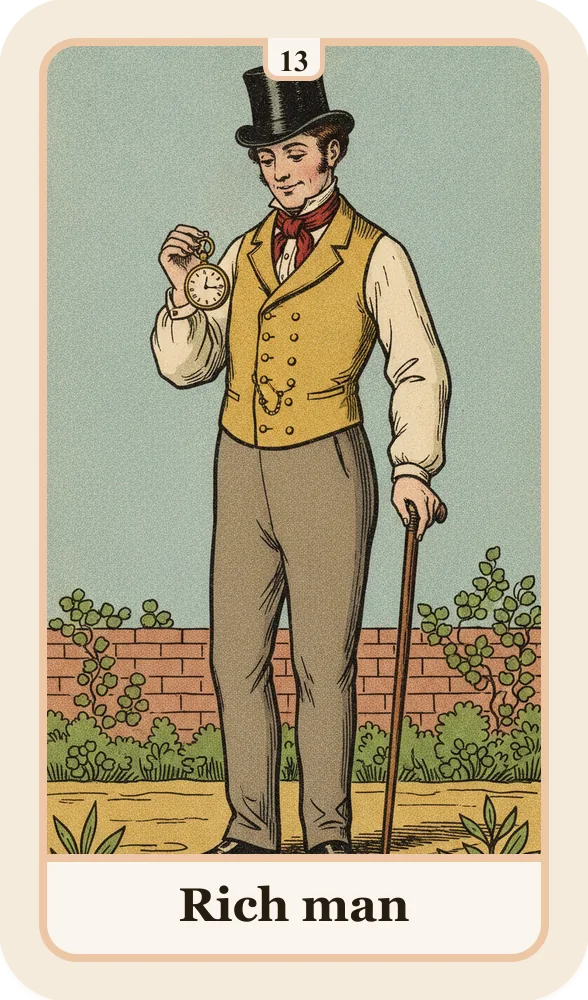 Rich man
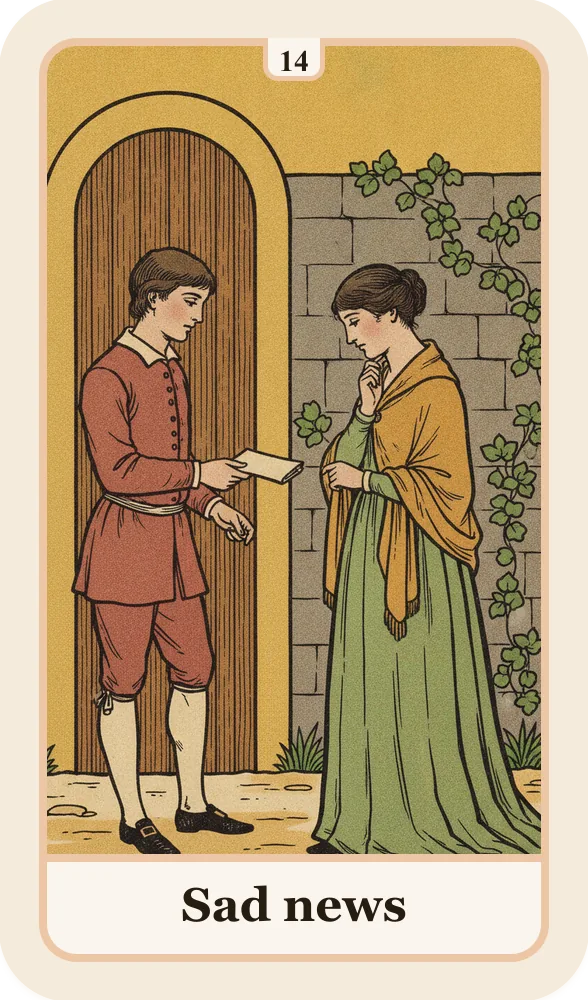 Sad news
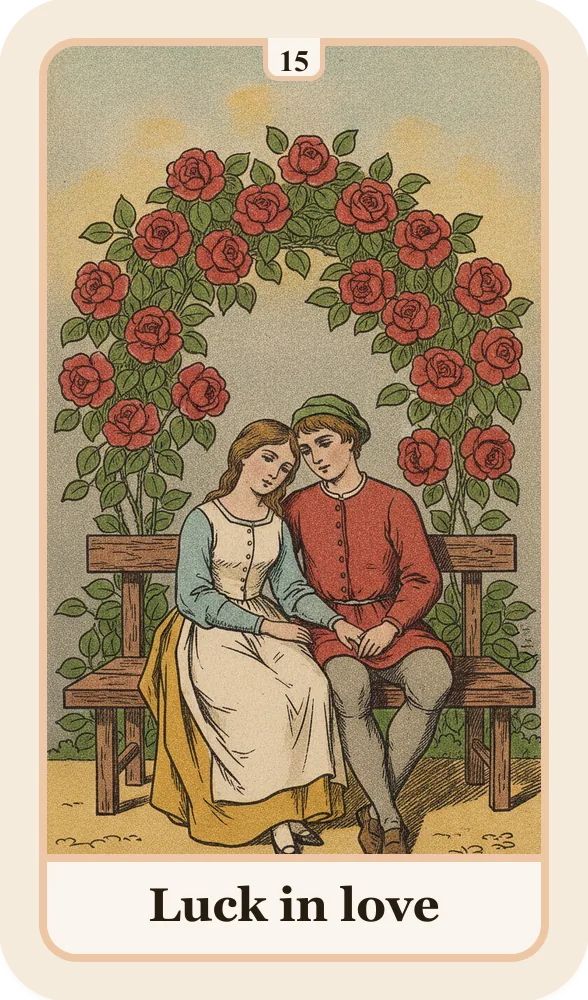 Luck in love
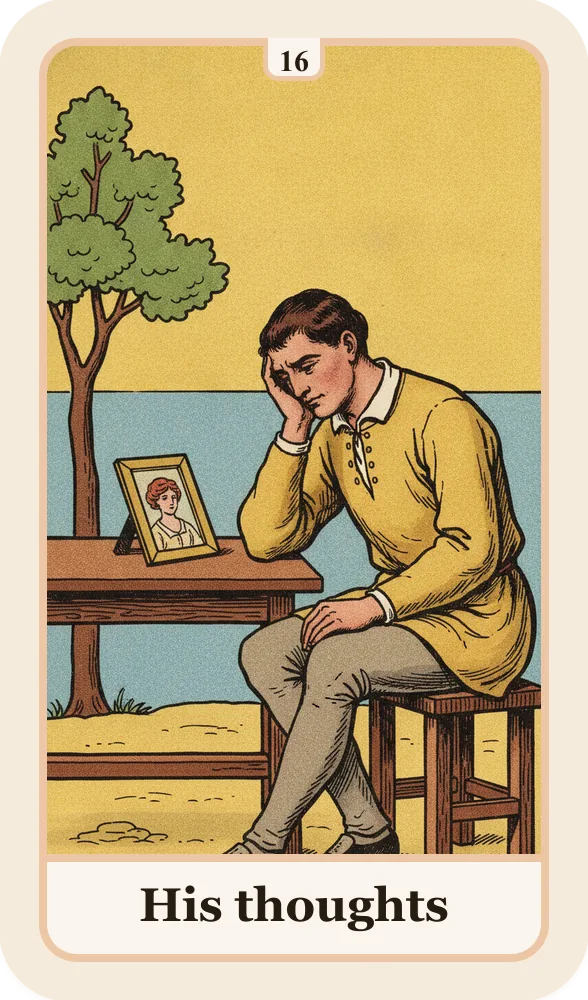 His thoughts
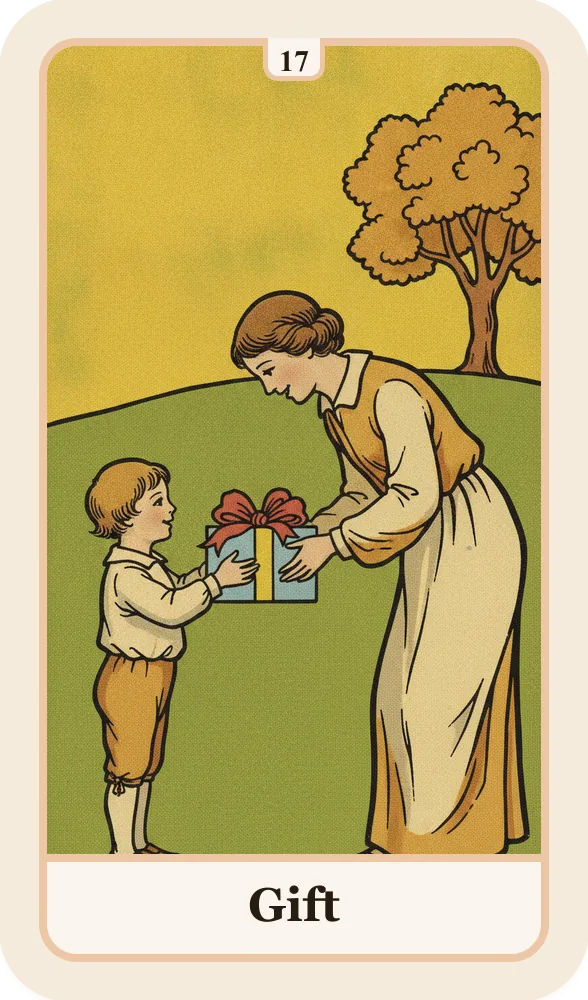 Gift
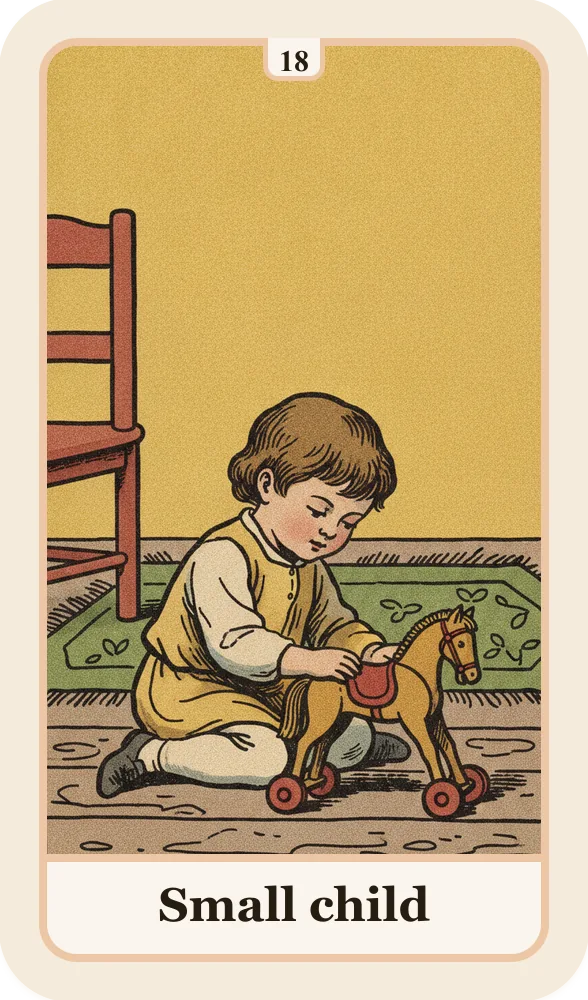 Small child
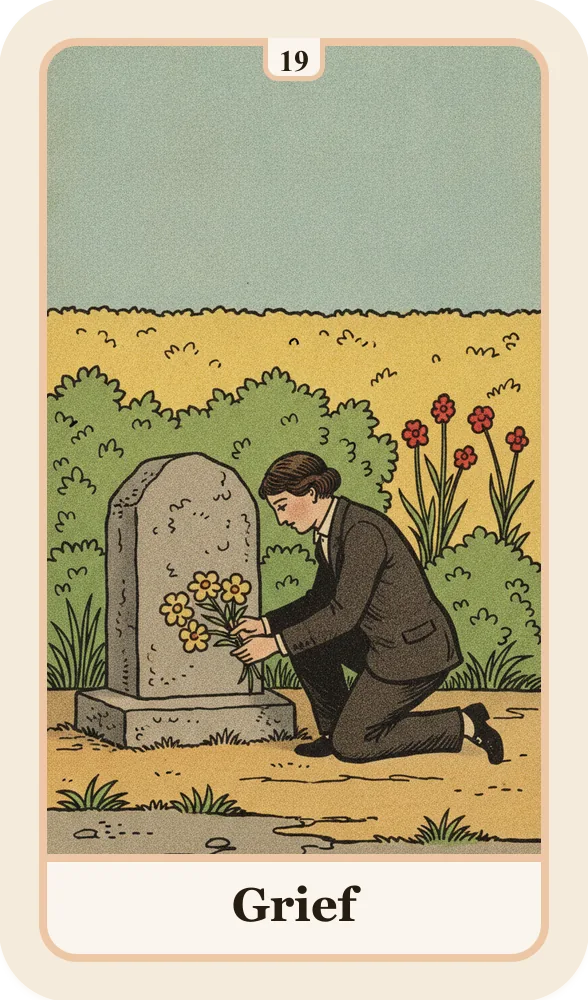 Grief
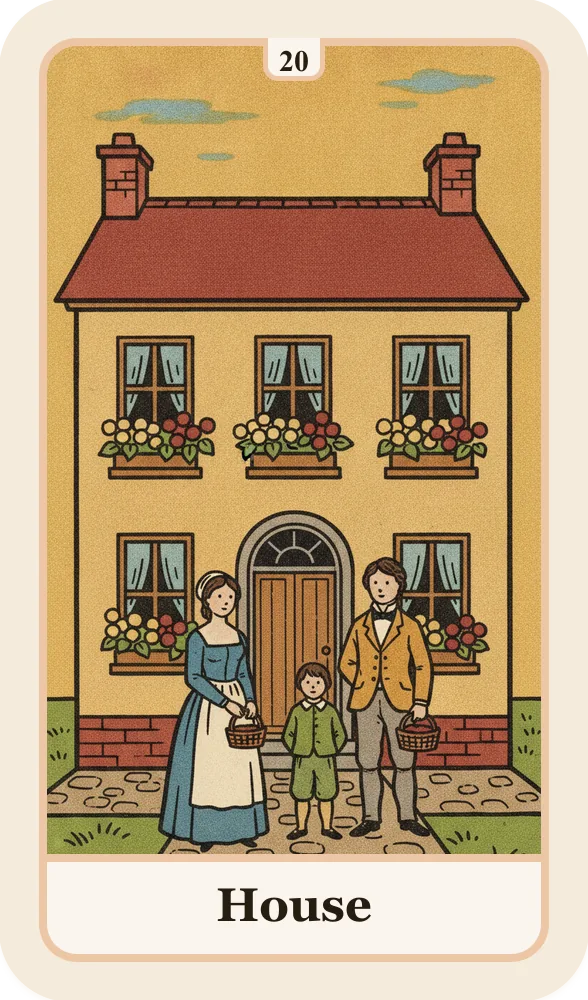 House
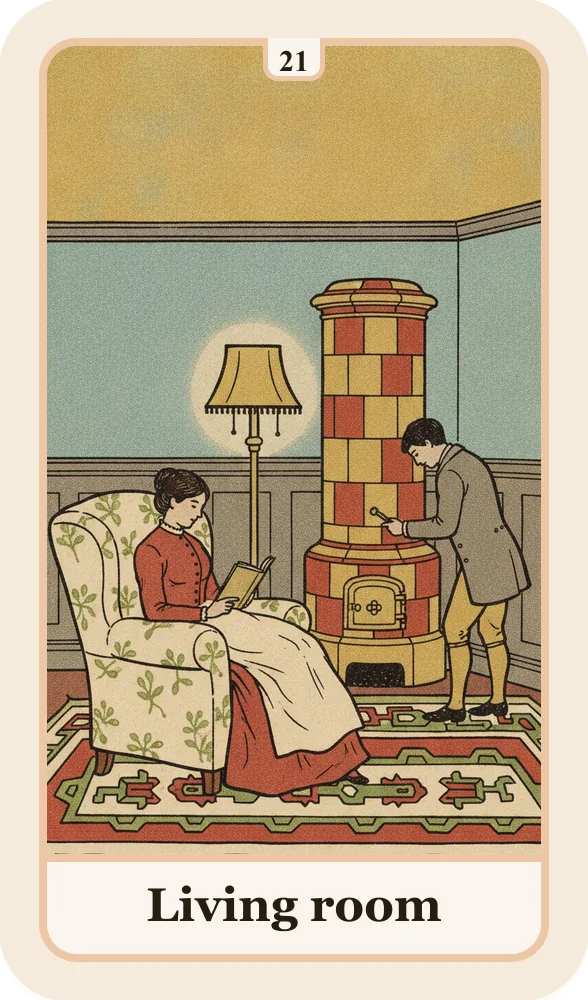 Living room
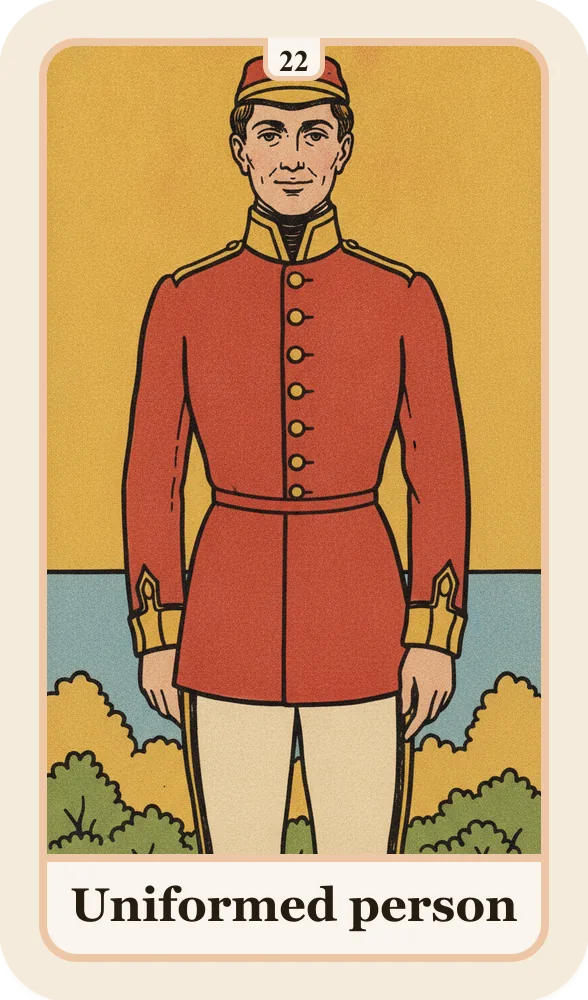 Uniformed person
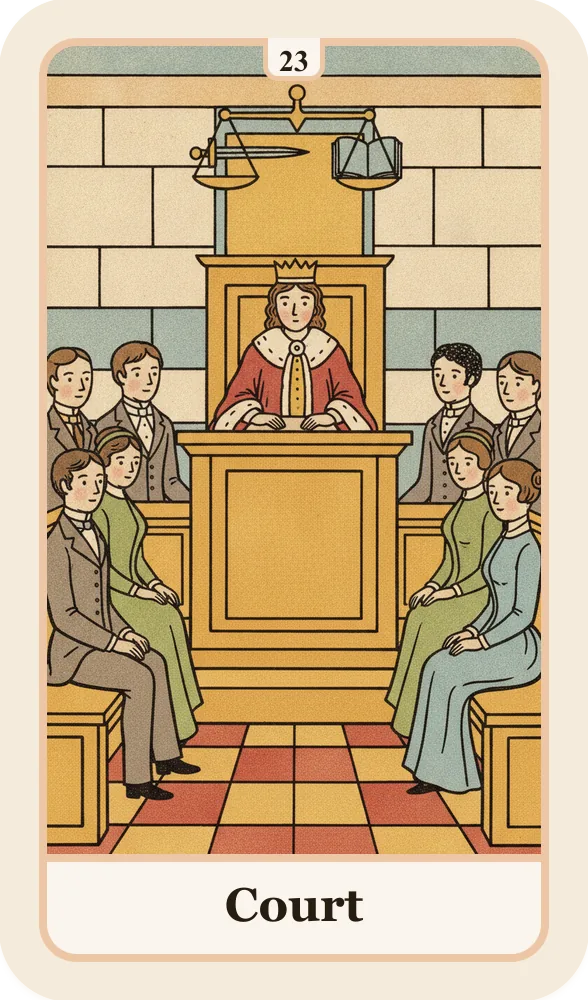 Court
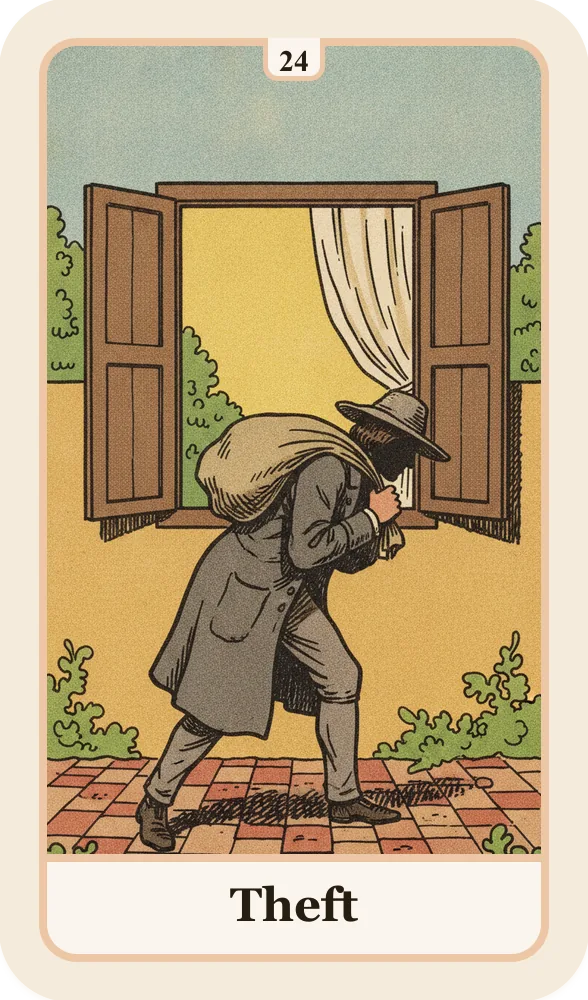 Theft
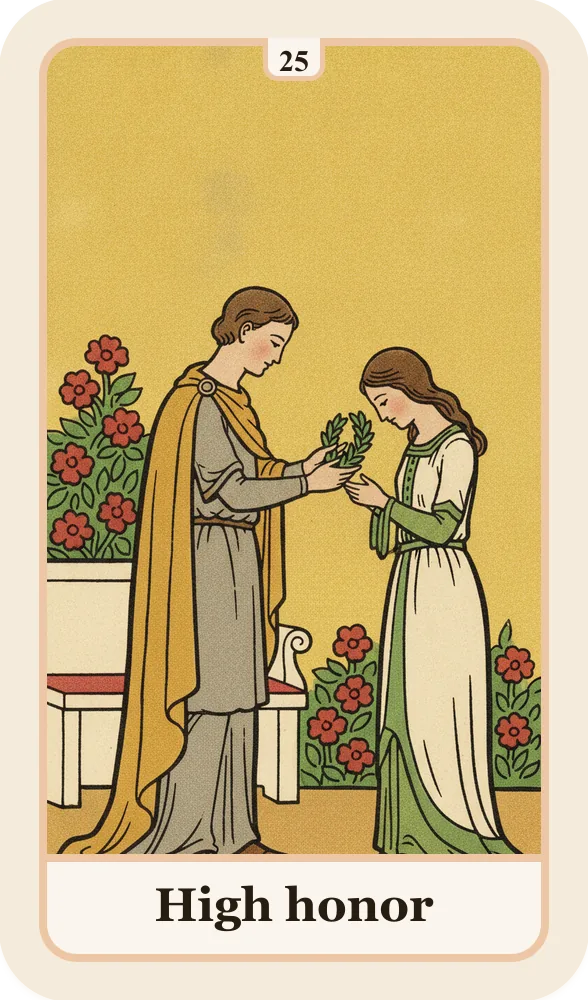 High honor
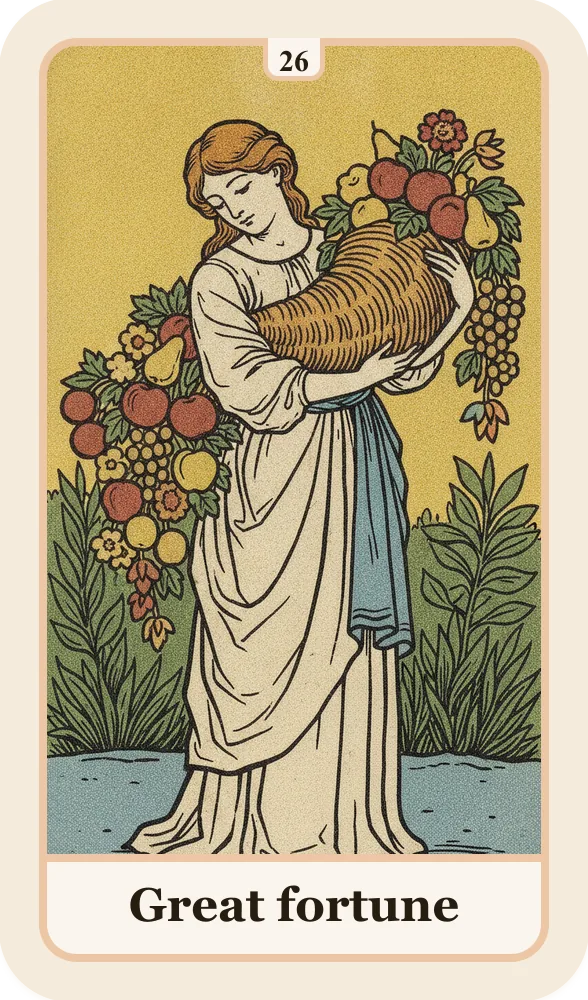 Great fortune
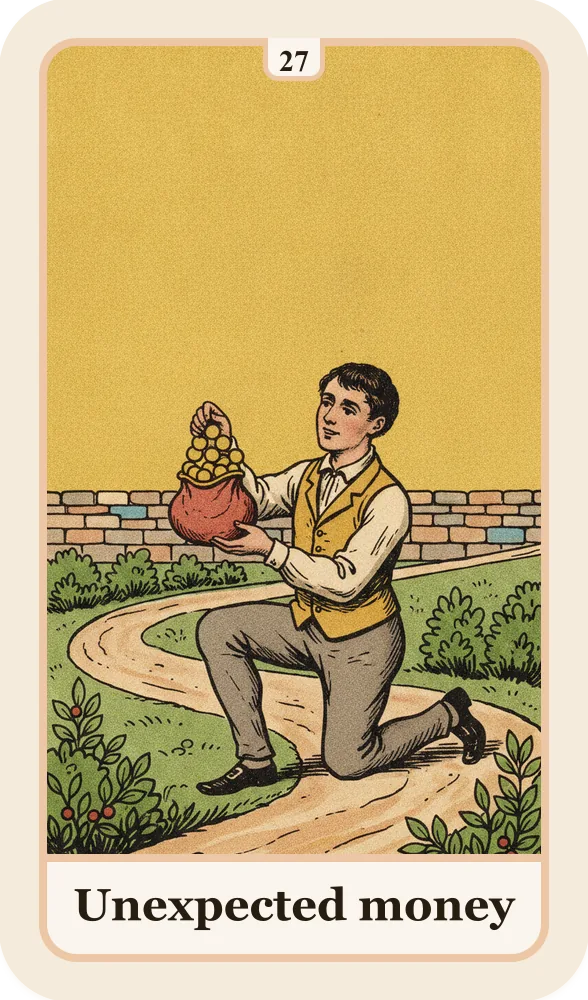 Unexpected money
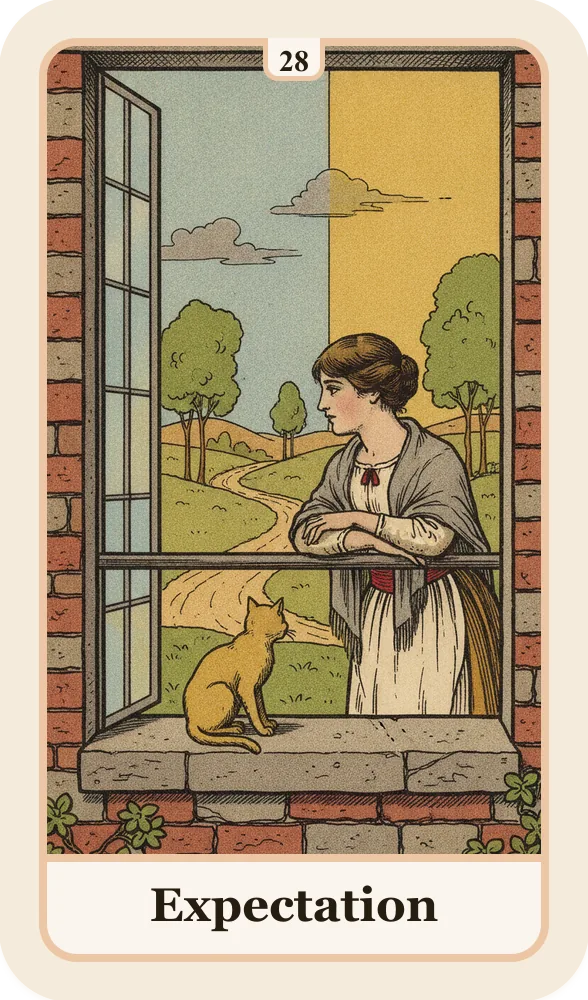 Expectation
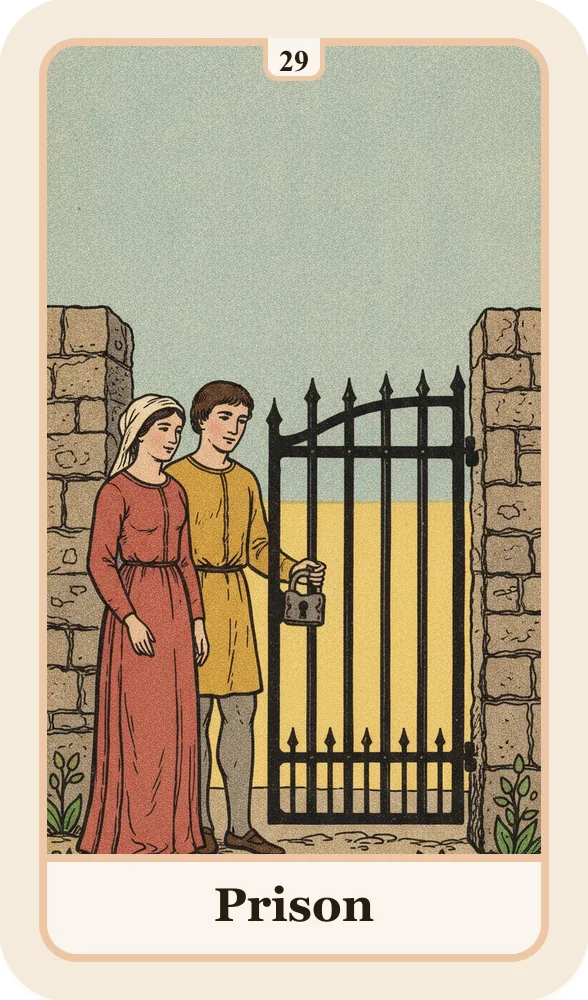 Prison
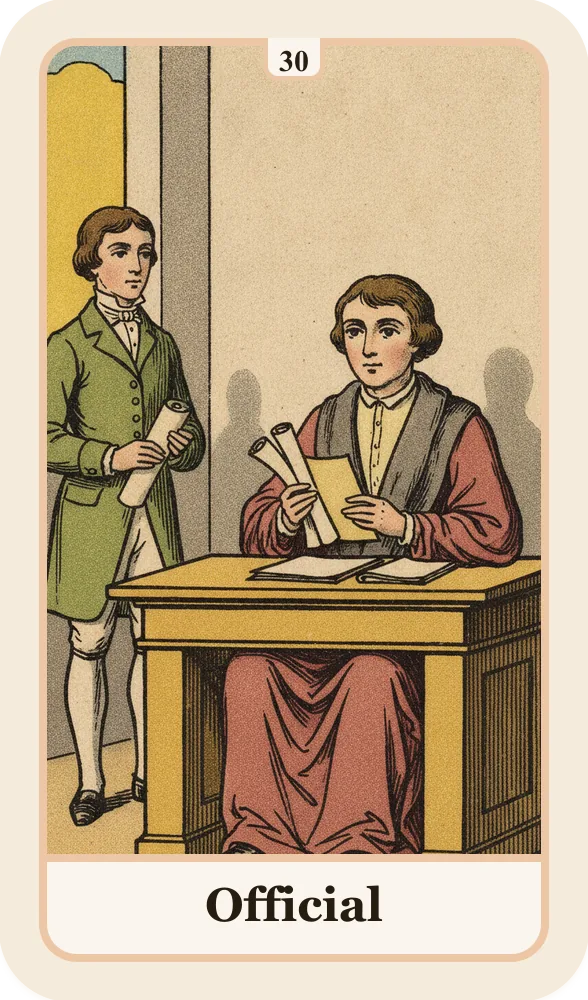 Official
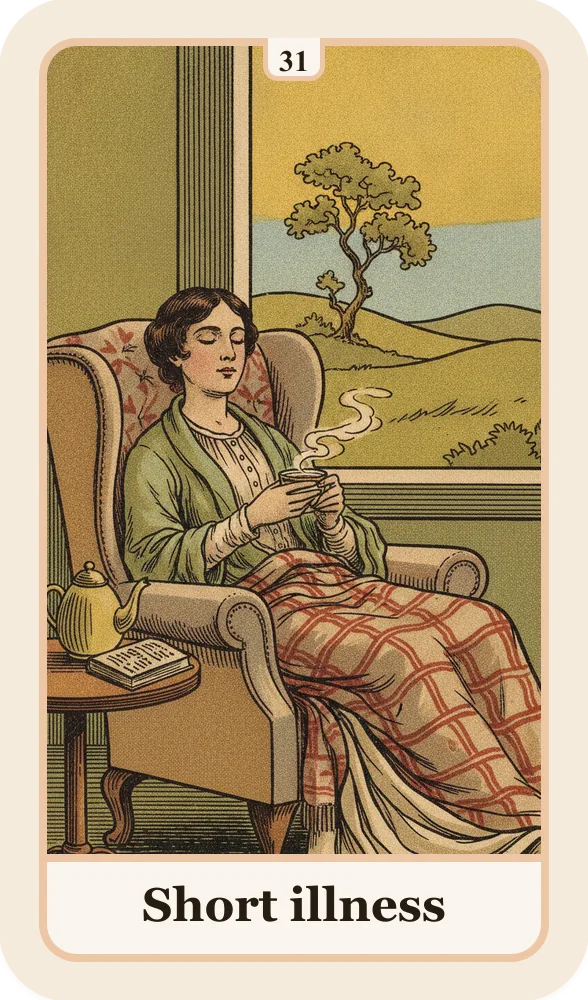 Short illness
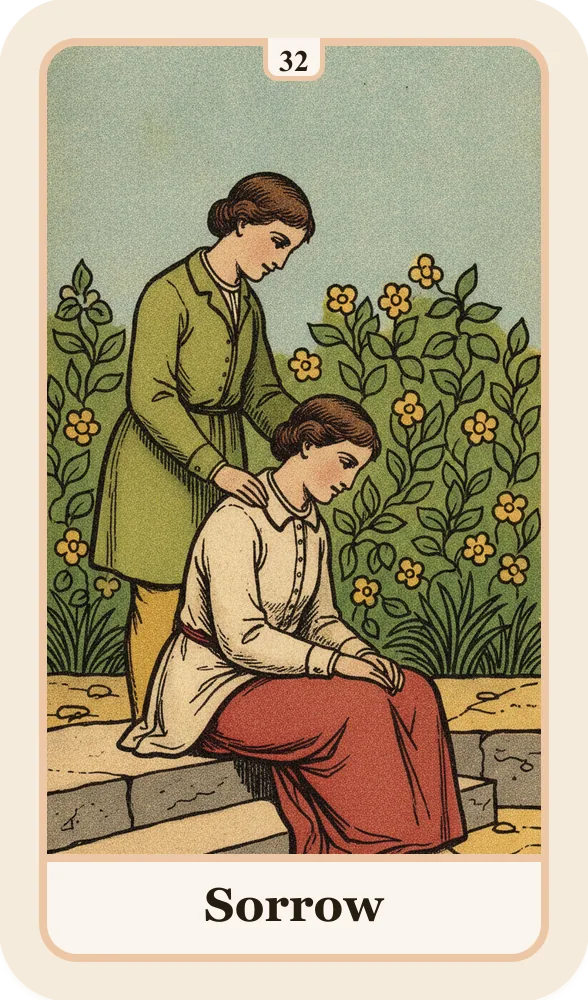 Sorrow
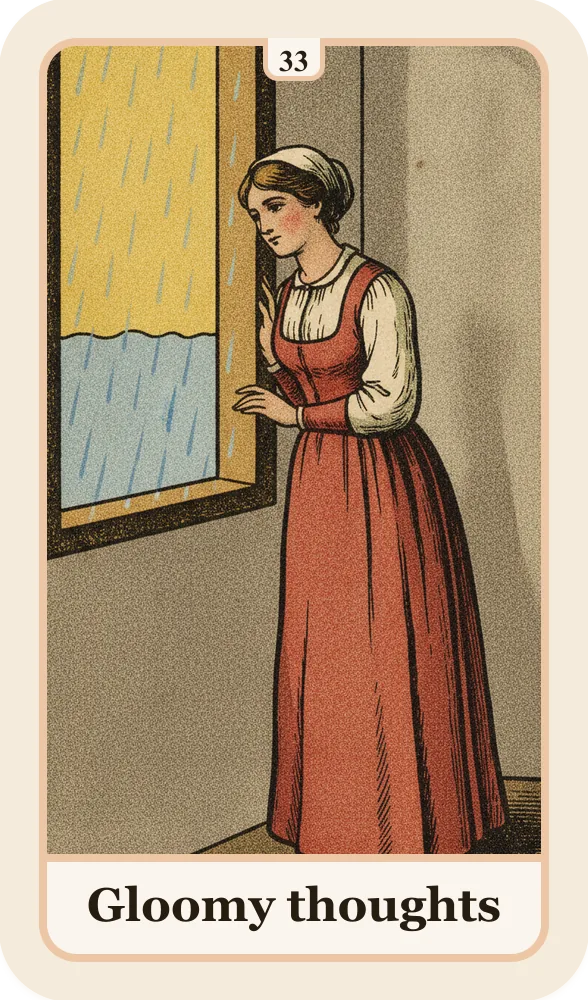 Gloomy thoughts
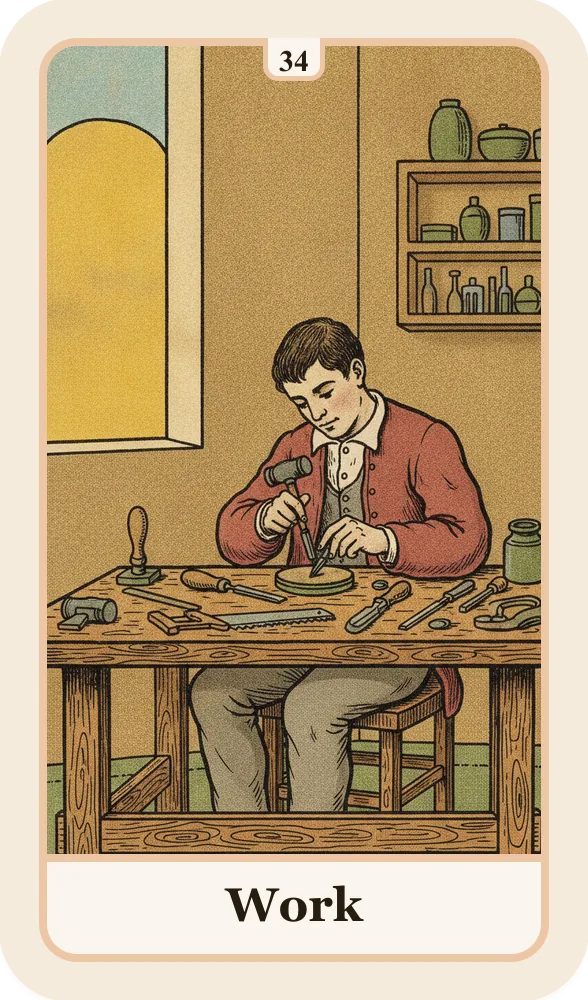 Work
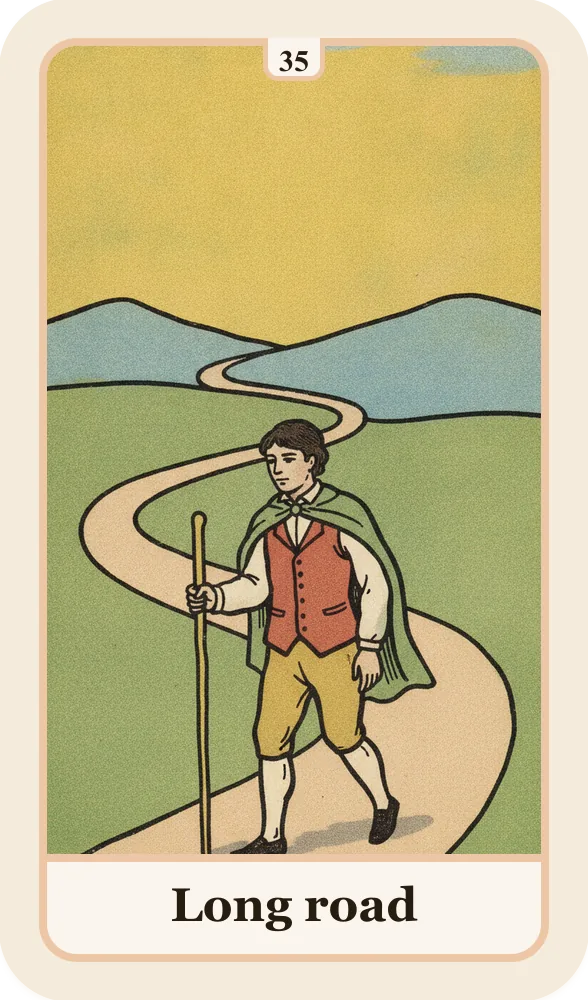 Long road
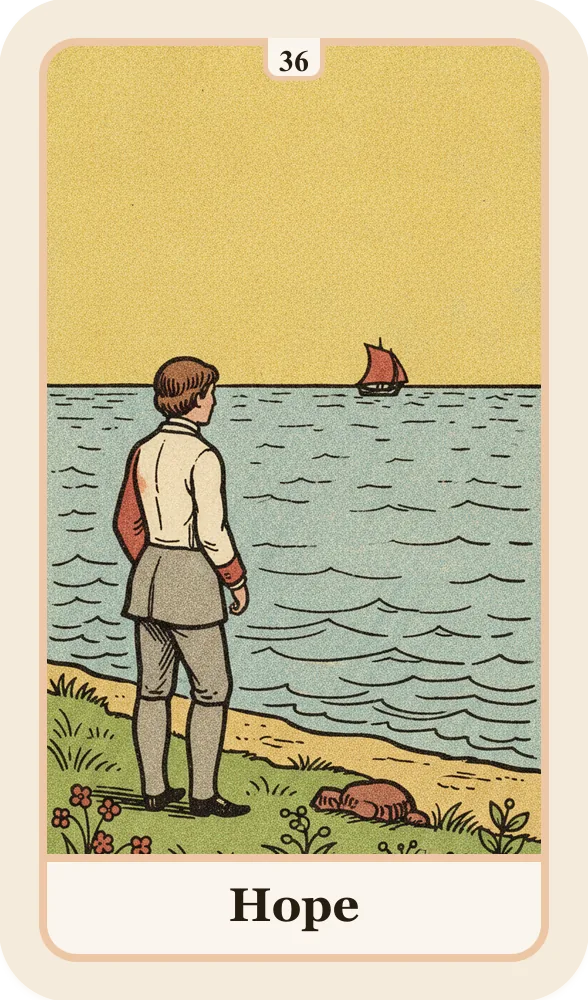 Hope
How often does a given card turn up in “Kipper daily spread”?
With 3 cards out of 36 Kipper cards cards, every single card is in your spread with 8.3 %. Lay it every day for a week and a given card shows up at least once with 45.6 %, within a month with 92.6 %.
Until you have seen each of the 36 cards at least once takes 49 days on average. The last missing cards take the longest, because fewer new ones are left each day.
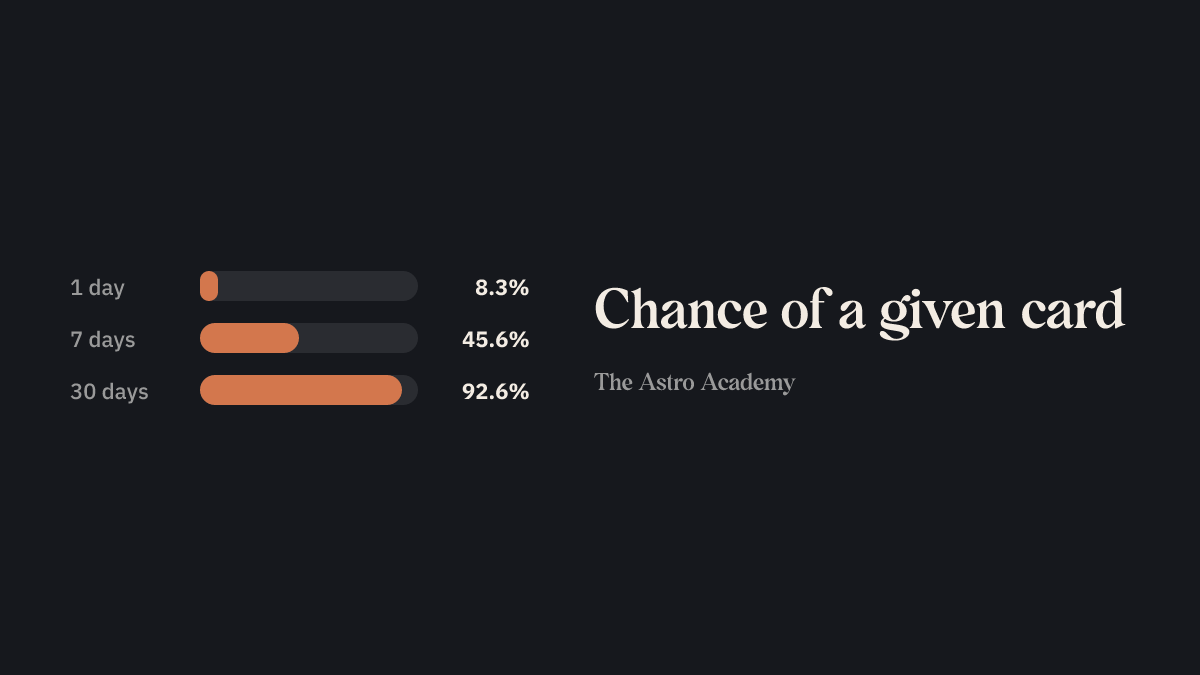
| Case | Value |
|---|---|
| Cards in the deck | 36 |
| Cards in the spread | 3 |
| Chance per card and spread | 8.3 % |
| At least once in 7 days | 45.6 % |
| At least once in 30 days | 92.6 % |
| Two given cards on consecutive places | 0.32 % |
| Days until every card was laid once (mean) | 49 |
Pure probability: every card equally likely, every spread freshly shuffled, no card twice in one spread. The mean until every card was laid is computed exactly over all intermediate states.
Keep exploring
Frequently asked questions
- What is the difference between Kipper and Tarot cards?
- Kipper and Tarot are very different systems. Tarot has 78 cards full of old symbols and pictures, while the 36 Kipper cards show concrete, everyday situations and people from the 1800s. Kipper readings are often more literal and about specific situations, focusing on practical things.
- Can I do a free Kipper card reading for love?
- Yes, Kipper cards can be very helpful for questions about relationships because they have so many person cards. They can highlight the people involved and how they interact. For specific love-related questions, you might want to check out spreads made for that.
- How many Kipper cards are there?
- A traditional Kipper deck has 36 cards. This number is the same across different versions of the deck. Each card shows a picture of a person, an event, or a place from daily life.
- Are Kipper cards good for beginners?
- Many people find Kipper cards easy to get into when they're starting, whether with a physical deck or with Kipper cards online. The images are very direct and often simple to understand without having to remember complicated symbol systems. Since the cards show real-life situations, your own gut feeling can be a big help.
- Where do Kipper cards come from?
- Kipper cards started in Germany in the late 1800s, around 1890. They're part of a tradition of German and Central European fortune-telling decks. The pictures show the society and daily life of that specific time and place.