
Kipper card · #32 / 36
Sorrow: Kipper card meaning
- Sadness
- Worry
- Grief
- Disappointment
- Emotional burden

Video · 29 seconds
Your thoughts are spinning?
The Sorrow Kipper card points to sadness and burdens. But it also holds an important clue about how to handle these feelings. Calculate it for free: theastroacademy.com
Read along
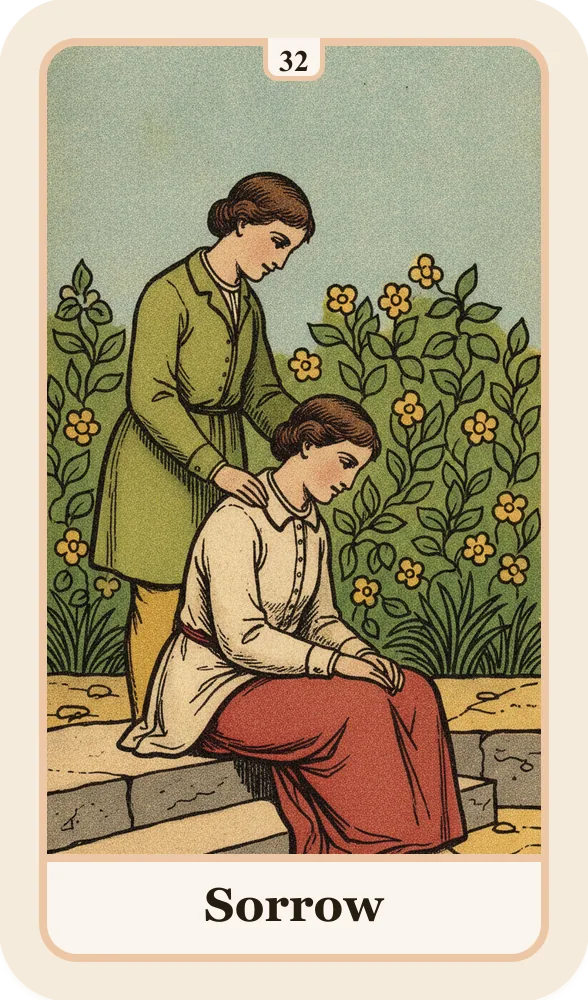
Do you ever lie in bed at night, your thoughts just spinning? That feeling has a name in the Kipper cards. It is called Sorrow. This card shows a person feeling sad. But look closer at the picture. There's a comforting hand on their shoulder. This is an invitation to share what's on your mind and let someone help. See where Sorrow appears in your own reading. Work it out for free at theastroacademy.com.
Contents
Sorrow in one sentence
This card shows sadness, worry, or disappointment. It points to a tough emotional time, but it also highlights that support is available, like the comforting hand.
| Feature | Sorrow |
|---|---|
| Number | 32 of 36 |
| Keywords | Sadness, Worry, Grief, Disappointment, Emotional burden |
| Yes or no | leaning no |
| Timing | Sorrow indicates that things are moving slowly, as emotional burdens can slow down progress. |
| In love | In a love reading, Sorrow can point to sadness within a relationship, a period of conflict, or heartache from a breakup. |
| Work & money | At work, this card can mean disappointment over a missed opportunity, a difficult environment, or stress about your job security. |
| Question for you | Who is the person whose hand you can imagine on your shoulder when you feel down? |
What the card shows
The image of a person with a lowered head clearly shows sadness. The Sorrow card represents a time of emotional hardship, worry, or grief. It’s that feeling you get with disappointment or loss. But the supportive hand on the person's shoulder is a key detail. It suggests that even when things are tough, comfort and help are close by.
This feeling might come from a personal setback, a misunderstanding with a friend, or just a phase of feeling down and discouraged. We all have days where things feel heavy, like when a plan you were excited about falls through. This card acknowledges that these feelings are a real part of life. What’s currently weighing on your mind or heart?
When Sorrow appears next to a person card, it could mean that person is having a hard time, or they're a source of worry for you. If a positive card like Gift follows it, that suggests relief or a pleasant surprise will help lift the emotional burden.
Love, work and money
In love
In a love reading, Sorrow can point to sadness within a relationship, a period of conflict, or heartache from a breakup. It asks you to gently acknowledge the pain you or your partner might be feeling. For singles, it can mean lingering sadness from past relationships that might need some attention.
Tip: Sorrow wants to be seen. If something in love weighs on you, write it down tonight and then read it aloud as if you were listening to a friend. What comfort would you give her?
Work & money
At work, this card can mean disappointment over a missed opportunity, a difficult environment, or stress about your job security. It’s a sign that your work life is currently a source of worry. It might help to talk about these concerns with a trusted colleague.
Tip: Sorrow shows what burdens you. Tell someone you trust about a worry from work today instead of carrying it alone. A shared load often weighs only half as much.
Does Sorrow say yes or no?
Leaning no. This card is linked to sadness, worry, and negative emotions. It suggests that the current situation is clouded by difficulties, making a “yes” unlikely right now.
What the card advises
Reach out to a friend you trust, not necessarily to solve anything, but just to share what’s on your mind.
Timing: Sorrow indicates that things are moving slowly, as emotional burdens can slow down progress.
Who is the person whose hand you can imagine on your shoulder when you feel down?
How often does a given card turn up in “daily spread”?
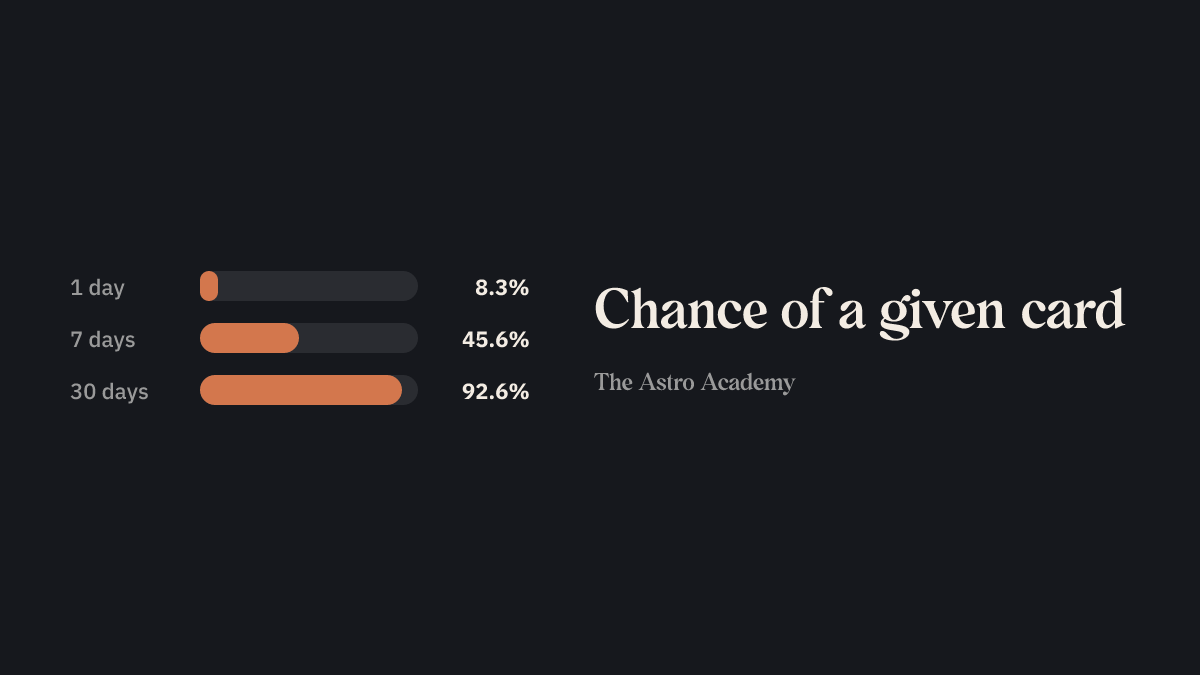
With 3 cards out of 36 Kipper cards cards, every single card is in your spread with 8.3 %. Lay it every day for a week and a given card shows up at least once with 45.6 %, within a month with 92.6 %.
Until you have seen each of the 36 cards at least once takes 49 days on average. The last missing cards take the longest, because fewer new ones are left each day.
| Case | Value |
|---|---|
| Cards in the deck | 36 |
| Cards in the spread | 3 |
| Chance per card and spread | 8.3 % |
| At least once in 7 days | 45.6 % |
| At least once in 30 days | 92.6 % |
| Two given cards on consecutive places | 0.32 % |
| Days until every card was laid once (mean) | 49 |
Pure probability: every card equally likely, every spread freshly shuffled, no card twice in one spread. The mean until every card was laid is computed exactly over all intermediate states.
In the big spread with all 36 cards, Sorrow is always there. The chance it lies in the top row is 25.0 %, that it lands exactly on its own house 32 2.78 %.
Read by me
Is Sorrow in your spread? I read it for you.
To Theresa’s readingFrequently asked questions
- Is Sorrow a card of depression?
- This card represents sadness and worry, which are normal human emotions. While it can point to a time of feeling very low, it’s not a clinical diagnosis. If you’re struggling with persistent feelings of sadness, it’s always best to seek support from a healthcare professional.
- What does the Sorrow card mean as a daily card?
- As a daily card, Sorrow suggests you might face a small disappointment or feel a bit down today. It’s a reminder to be gentle with yourself and others. It also encourages you to notice sources of comfort, no matter how small.
- How do I deal with the feelings the Sorrow card brings up?
- The card itself offers a clue with the supportive hand. Acknowledge your feelings without judgment and think about sharing them with someone you trust. Allowing yourself to feel the sadness, instead of pushing it away, is often the first step toward moving through it.