
Rauhnächte 2026/27
The Rauhnächte 2026/27: from December 25 to January 6, twelve nights for twelve months.
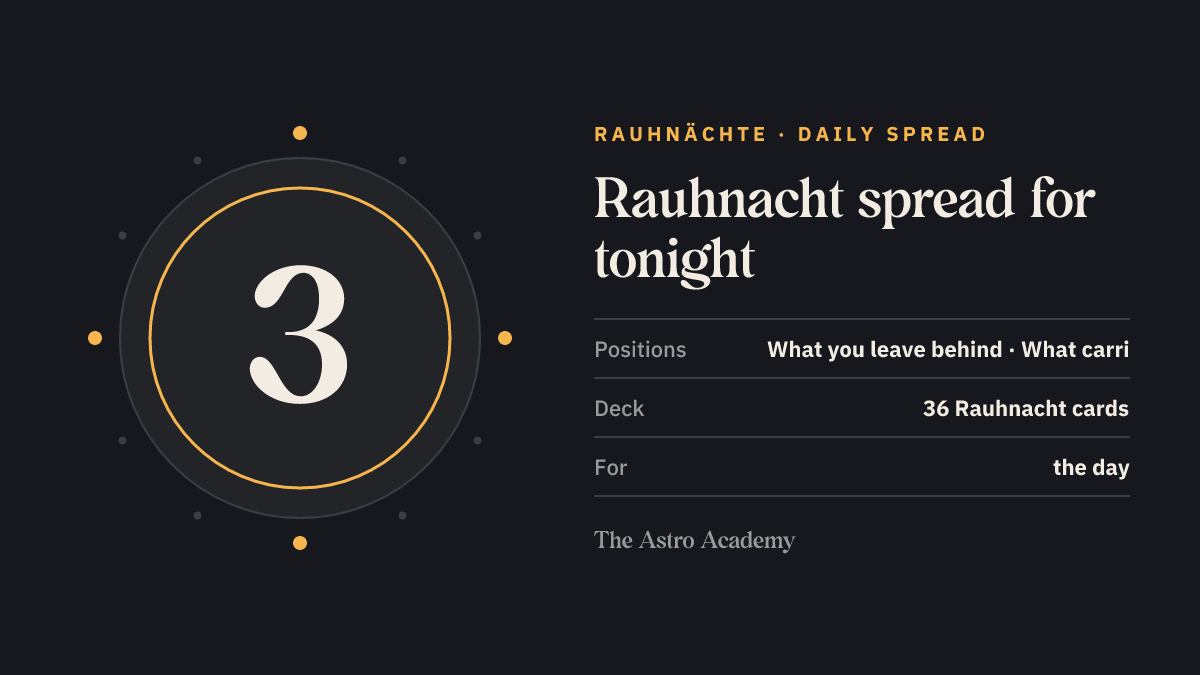
Prepare your 13 wishesRauhnacht spread for tonight
Focus on your question and draw all three cards.
3 cards to go.

Video · 39 seconds
Your Year in 12 Nights
The Rauhnächte are the twelve nights between Christmas and Epiphany. Tradition sees each night as a mirror for one month of the coming year. Calculate it for free: theastroacademy.com
Read along
Imagine your next year has twelve compartments. One for each month. This is the idea behind the Rauhnächte. The twelve nights between Christmas and Epiphany. Each night is a mirror for one month of the coming year. The first night for January, the second for February. You can look inside each compartment. You see what was good and what you might want to let go of. This time is an invitation to close the old year and consciously start the new one. Your personal Rauhnächte calendar shows the themes for each month. Calculate it for free at theastroacademy.com.
Rauhnächte: the twelve holy nights
The Rauhnächte are the twelve nights between Christmas and Epiphany, a quiet time for reflection. This tradition from German-speaking Europe sees each night as a mirror for one month of the coming year. It is a space to look back, look ahead, and find your footing for what is to come.
Contents
The twelve Rauhnächte
Each night stands for a month. Each has a theme, a ritual and an audio.
Rauhnacht 1 · January
Night of December 25 into 26. Looking back: what was good this year.
Rauhnacht 2 · February
Night of December 26 into 27. Reframing what was hard.
Rauhnacht 3 · March
Night of December 27 into 28. Forgiving and letting go.
Rauhnacht 4 · April
Night of December 28 into 29. Best times.
Rauhnacht 5 · May
Night of December 29 into 30. Sorting the areas of your life.
Rauhnacht 6 · June
Night of December 30 into 31. Who you want to be.
Rauhnacht 7 · July
Night of December 31 into January 1. Vision: where you want your year to go.
Rauhnacht 8 · August
Night of January 1 into 2. Collecting dreams.
Rauhnacht 9 · September
Night of January 2 into 3. Trust.
Rauhnacht 10 · October
Night of January 3 into 4. Wishes.
Rauhnacht 11 · November
Night of January 4 into 5. Your plan: the first small step.
Rauhnacht 12 · December
Night of January 5 into 6. Direction: your north star.
Tools for your twelve nights
Calculator, ritual and spreads for the time between the years.
Rauhnächte calendar
Twelve nights, twelve months: the theme your chart shows for each month of 2027.
The thirteen-wishes ritual
Write your wishes, burn one each night. Stays on your device only.
Card of the night
One card from the Rauhnacht oracle for this evening.
Twelve-month spread
Twelve cards, one for each month of your new year.
Rauhnacht diary
Your cards and dreams of the twelve nights, by date.
Your Rauhnacht spread, read by Theresa
Draw your cards and I read them for your question. Ordered by December 23, it is with you before Christmas Eve.
The audio program of the twelve nights
A guided audio from the healing library for each evening, 6 to 40 minutes. Each one has a free preview.
The Rauhnächte 2026/27
| Night | Date | Stands for | Theme |
|---|---|---|---|
| Night 1 | December 25 | January | Looking back: what was good this year |
| Night 2 | December 26 | February | Reframing what was hard |
| Night 3 | December 27 | March | Forgiving and letting go |
| Night 4 | December 28 | April | Best times |
| Night 5 | December 29 | May | Sorting the areas of your life |
| Night 6 | December 30 | June | Who you want to be |
| Night 7 | December 31 | July | Vision: where you want your year to go |
| Night 8 | January 1 | August | Collecting dreams |
| Night 9 | January 2 | September | Trust |
| Night 10 | January 3 | October | Wishes |
| Night 11 | January 4 | November | Your plan: the first small step |
| Night 12 | January 5 | December | Direction: your north star |
The count here follows the most common custom: on December 24 you write the wishes, the first night is December 25 into 26, the last January 5 into 6. In some regions the nights begin as early as December 21.
How often does a full moon fall into the Rauhnächte?
In 40 of 100 years (40 %) a full moon falls into the twelve nights, in 39 years a new moon. Both together never happen: almost 15 days lie between full and new moon, and the nights last only twelve.
In the Rauhnächte 2026/27 neither a full moon nor a new moon falls into the twelve nights: the full moon comes just before, the new moon just after.
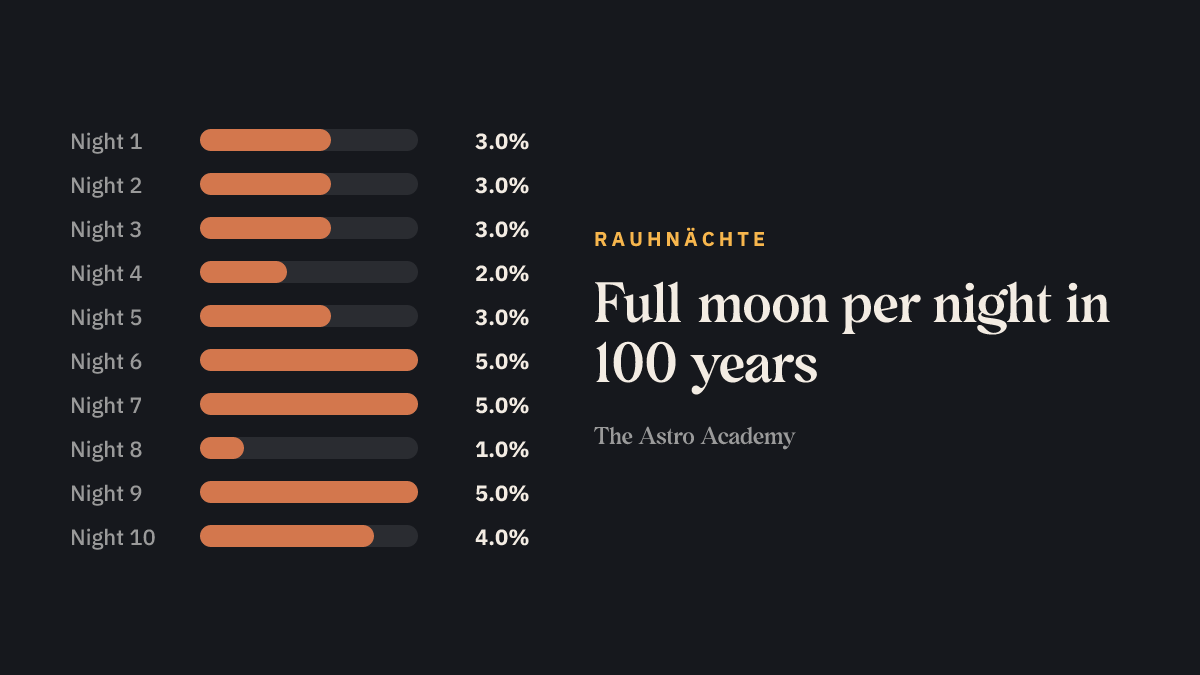
| Season | Moon in the nights |
|---|---|
| 2026/27 | none |
| 2027/28 | New moon, December 27, 2027, night 3 |
| 2028/29 | Full moon, December 31, 2028, night 7 |
| 2029/30 | New moon, January 4, 2030, night 11 |
| 2030/31 | none |
| 2031/32 | Full moon, December 28, 2031, night 4 |
| 2032/33 | New moon, January 1, 2033, night 8 |
| 2033/34 | Full moon, January 4, 2034, night 11 |
Calculated with the Swiss Ephemeris for the seasons 1950/51 to 2049/50. The day of the exact full or new moon in German time counts; the nights are the evenings from December 25 to January 5.
The meaning of the Rauhnächte, or twelve holy nights
The twelve holy nights traditionally begin on the night of December 25 and end before Epiphany on January 6. The idea comes from a simple calendar gap.
Twelve lunar months make up about 354 days, while the solar year has about 365. This leaves a difference of eleven days and twelve nights, a period once considered 'between the years' and outside of ordinary time. During this time, old European stories say the veil between worlds is thin.
Figures like Mother Hulda, known from fairy tales, are said to roam the land with the ghostly Wild Hunt. The name Rauhnacht itself points to these customs. It may come from the German word for smoke ('Rauch') from burning incense, or from an old word for hairy ('rûch'), describing the fur-clad spirits of folklore.
Traditional ways to observe the twelve nights
Many customs for the Rauhnächte focus on cleansing the old and welcoming the new.
- Smudging homes: People would smudge their homes and stables with incense to clear out old energies and protect against harm.
- Dreams: Close attention was paid to dreams, as each night's dream was thought to hint at the theme for its corresponding month in the new year.
- Weather: Even the weather of each day was noted for the same reason. Other traditions involve actively looking ahead.
- Writing wishes: People would write down thirteen wishes, one for each of the twelve months and an extra one.
- Lead pouring: Another popular custom was lead pouring to get a symbolic shape for the year, though today melted wax is used instead for safety. It was also a time of stillness.
- Stillness rules: Some rules advised against activities like doing laundry or playing card games to avoid disturbing the peace and attracting misfortune.
How to create your own Rauhnacht ritual
You can shape your own Rauhnacht ritual in a way that feels right for you; it does not need to be complicated.
- Draw one card: A simple practice is to draw one oracle card each evening. This card can serve as a theme for reflection for that night and its related month.
- Light a candle: You might light a candle and spend just a few quiet minutes with the card's image and meaning.
- Keep a journal: Consider keeping a small journal for these twelve nights.
- Write down card: Each evening, you could write down the card you drew and a few thoughts or feelings that come to mind.
- Add dreams: In the morning, you might add any dreams you remember, no matter how strange they seem. This creates a personal map of themes for your year ahead.
You can then revisit your notes during the year, for example, by reading what you wrote on the third night when March begins.
How to use the three card Rauhnacht spread
The three-card spread at the top of the page offers a moment of personal reflection for this transition. It is designed to help you take stock as you stand on the threshold between the old year and the new one.
The cards are not predictions. Think of them as mirrors, showing you patterns and possibilities to consider. The first card, 'What you leave behind', can point to a theme or pattern from the past year that is now complete. The second, 'What carries you through the night', often suggests a source of strength or a quality you can rely on during this quiet time.
Perhaps it is your patience or your sense of humor. The third card, 'What you take along', may highlight a focus or an attitude that could be helpful for the year ahead. Check for yourself which parts of the interpretation feel true for you.
| Card position | Meaning |
|---|---|
| First card | What you leave behind |
| Second card | What carries you through the night |
| Third card | What you take along |
Which deck suits your question?
You can lay all five decks here for free. They differ in how many cards they have and in how you read them.
| Deck | Cards | Spreads | Typical |
|---|---|---|---|
| Oracle | 40 | 5 | angel cards with one message each, no fixed rules |
| Lenormand | 36 | 8 | plain everyday images, two neighbouring cards make one statement |
| Rauhnächte | 36 | 6 | cards for the twelve nights between the years |
| Kipper cards | 36 | 6 | people and everyday situations, the direction of a gaze counts too |
| Tarot | 78 | over 70 | 22 Major and 56 Minor Arcana, big themes and everyday life |
Popular spreads
A spread for every question.
Card of the night
1 card · One card for this Rauhnacht.
Twelve-month Rauhnacht spread
12 cards · Twelve cards, one for each night and each month.
Look back, look ahead
4 cards · Four cards for the old and the new year.
Wish spread
3 cards · Your wish, what stands in its way, and your part.
Letting-go spread
3 cards · Three cards for what can come to an end.
Five-card threshold spread
5 cards · You on the threshold between two years.
All 36 Rauhnacht cards
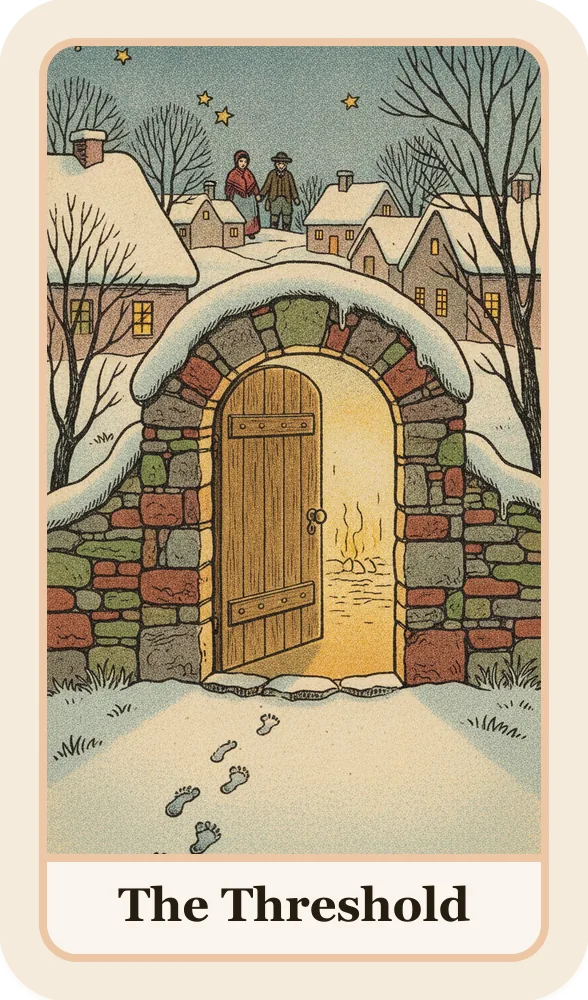 The Threshold
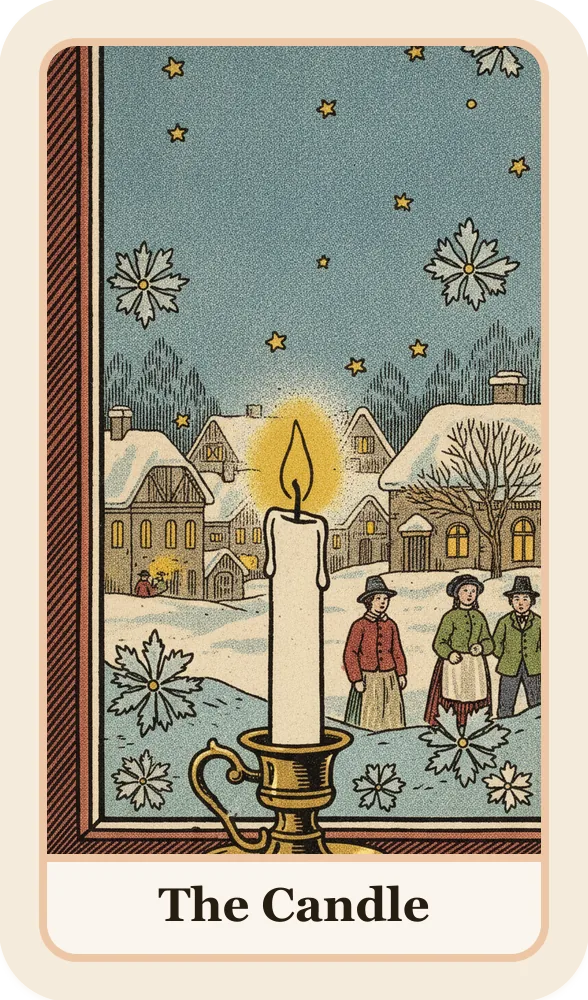 The Candle
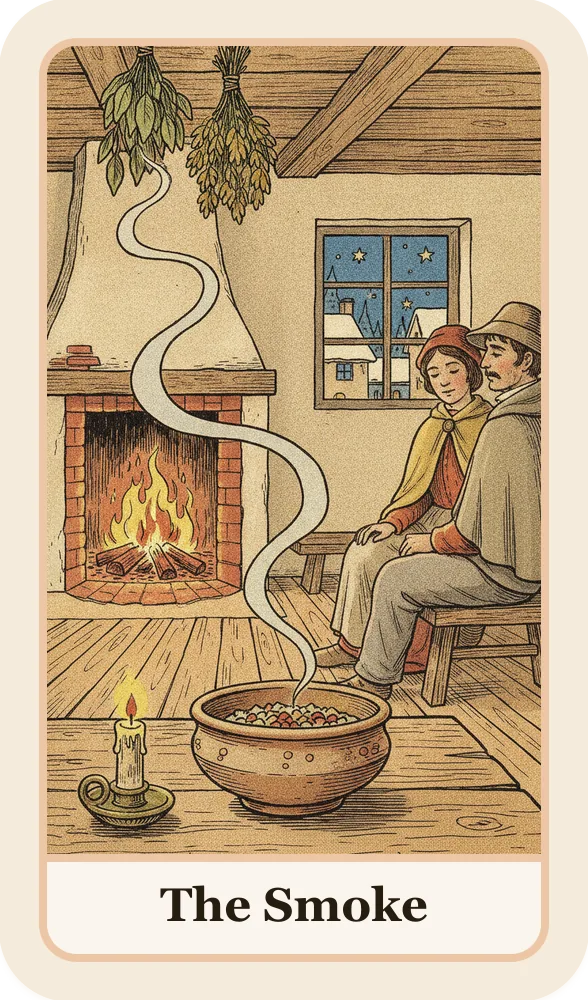 The Smoke
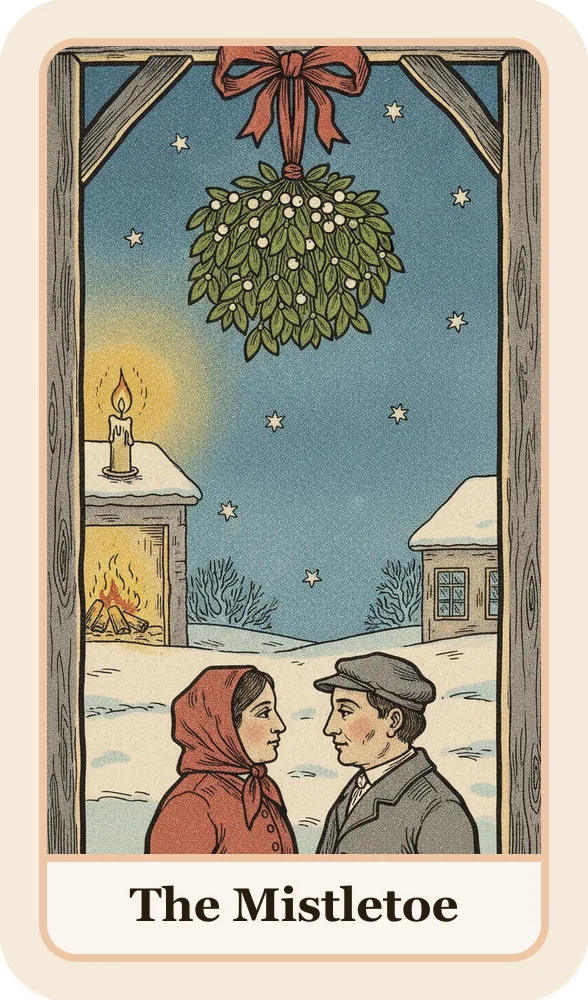 The Mistletoe
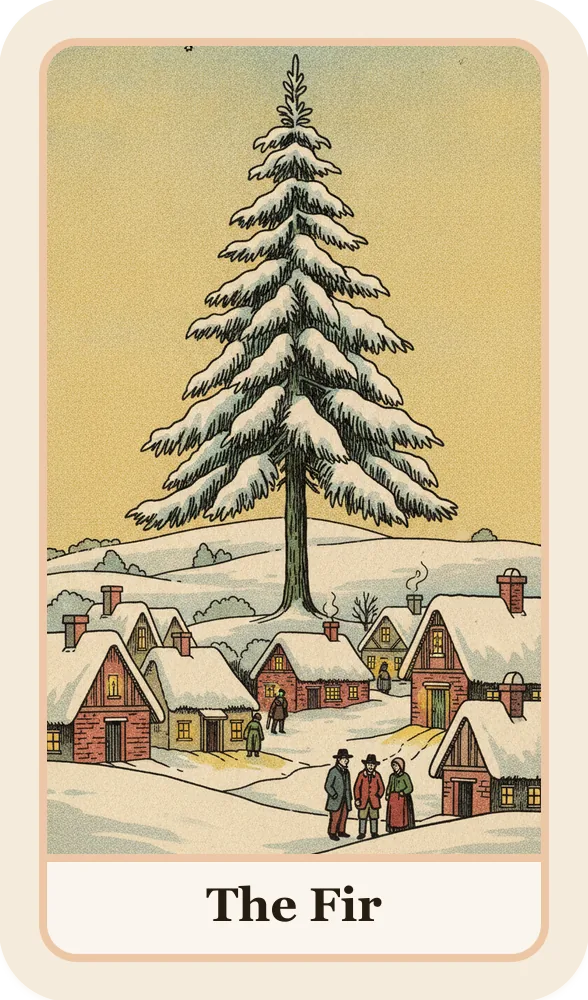 The Fir
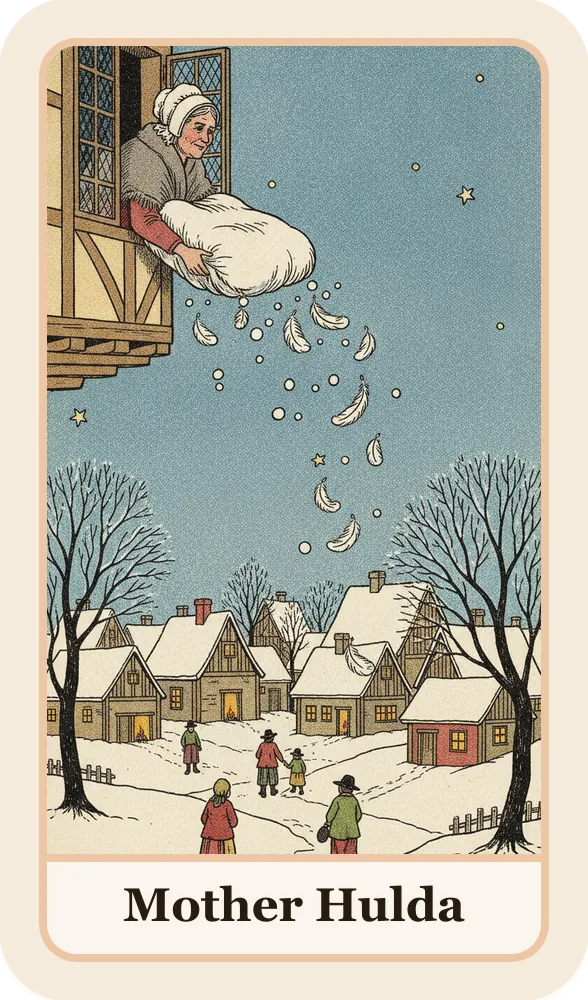 Mother Hulda
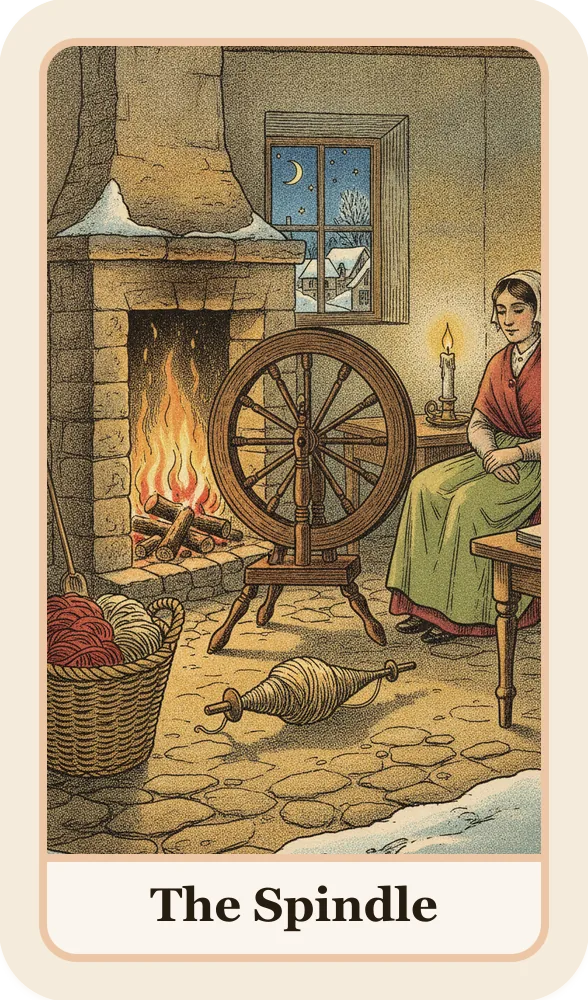 The Spindle
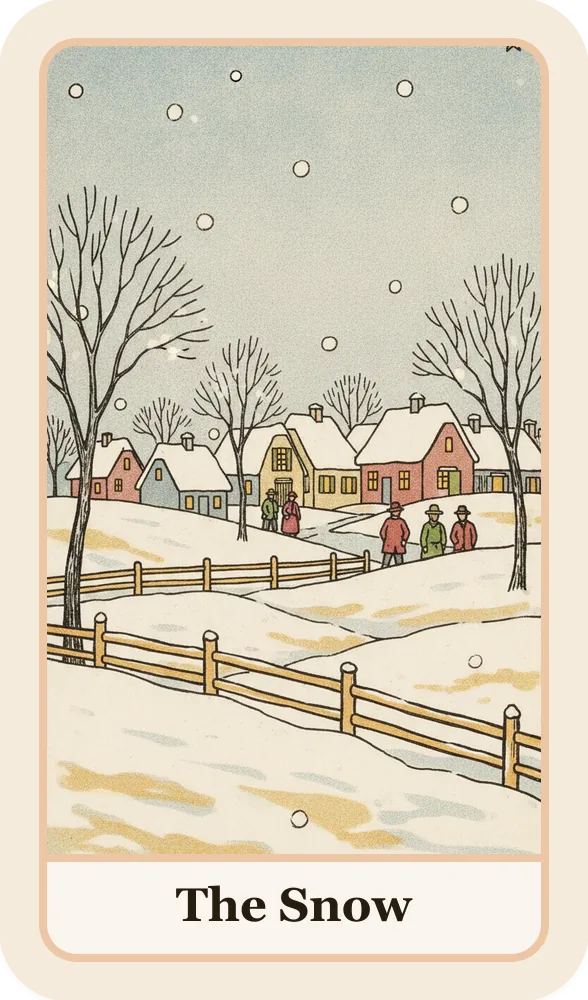 The Snow
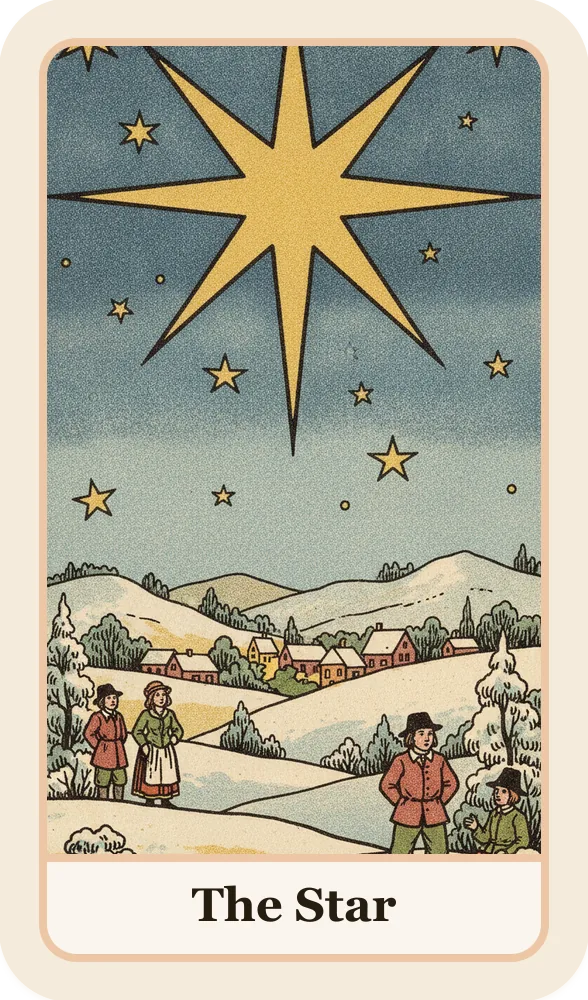 The Star
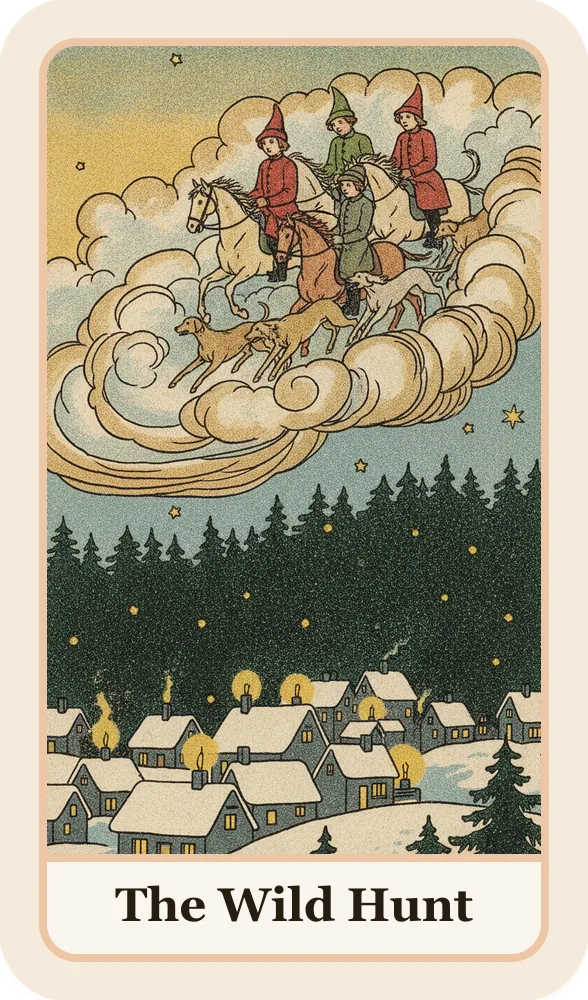 The Wild Hunt
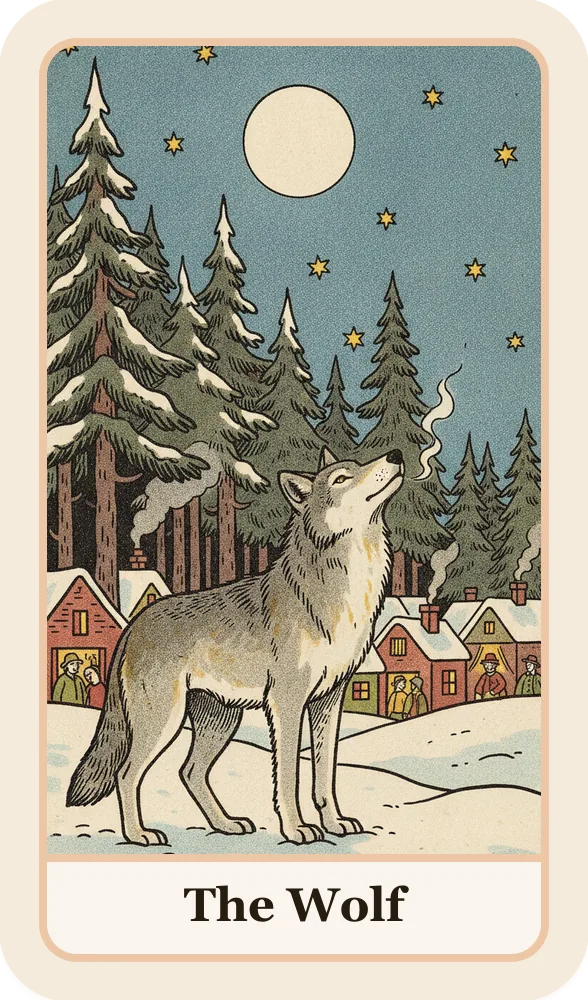 The Wolf
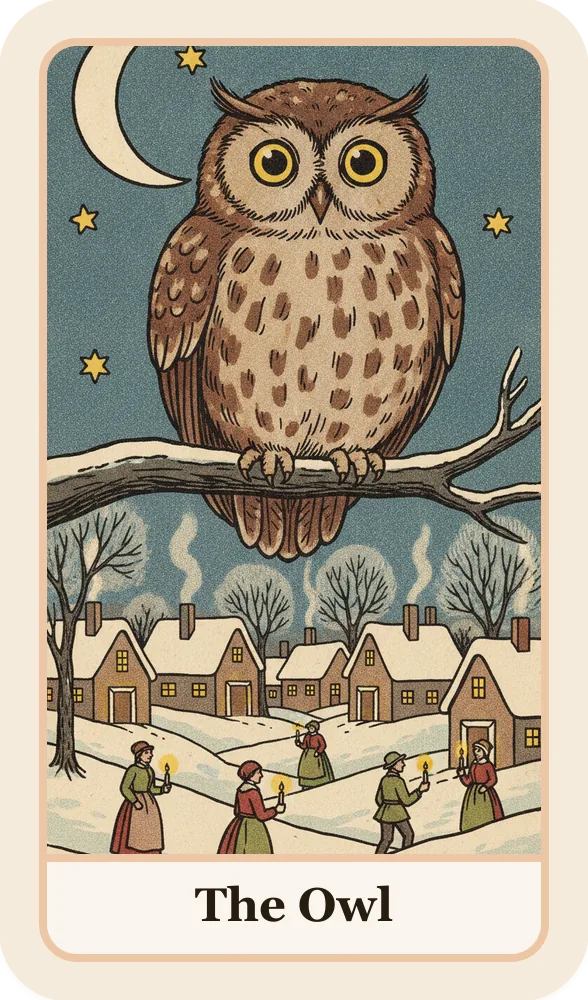 The Owl
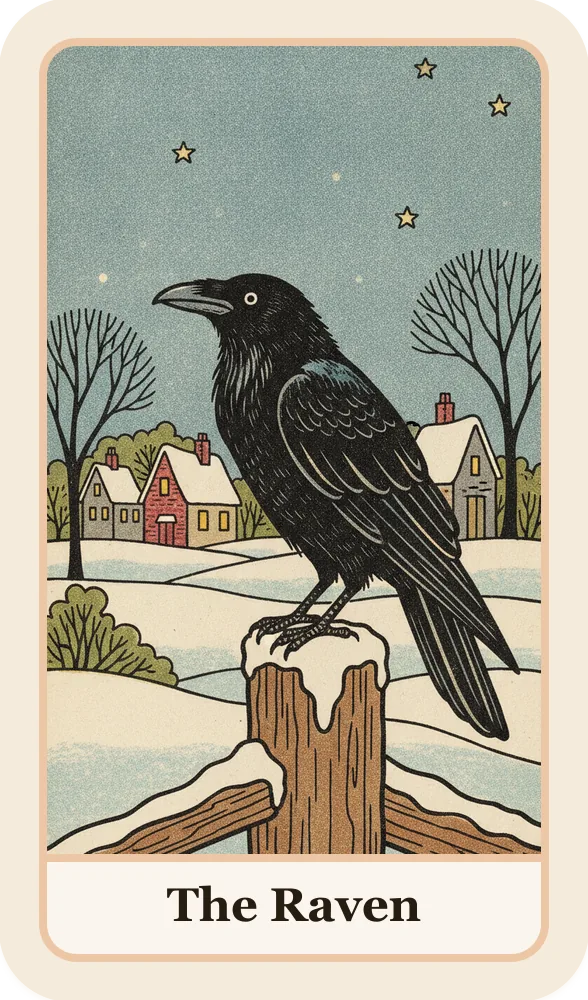 The Raven
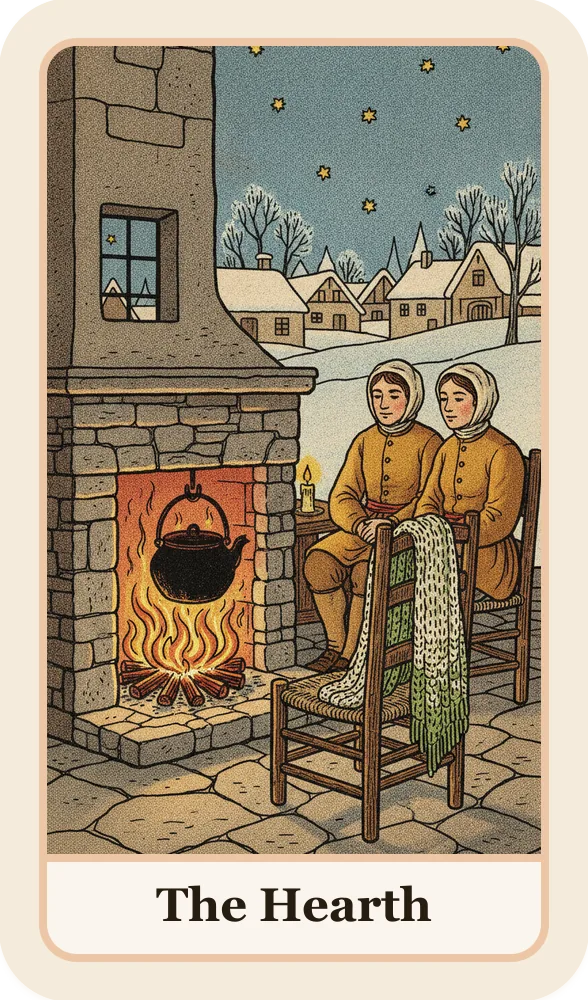 The Hearth
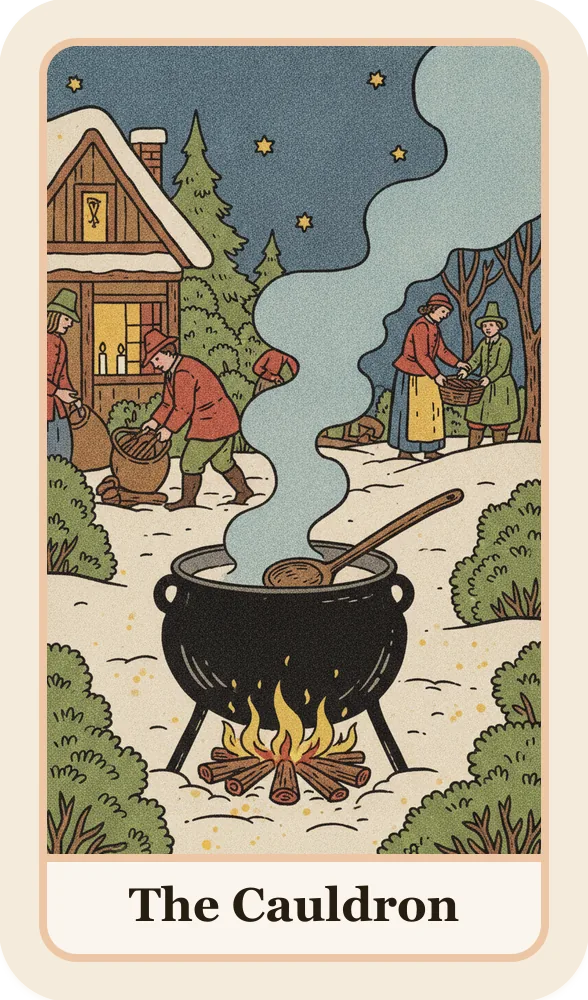 The Cauldron
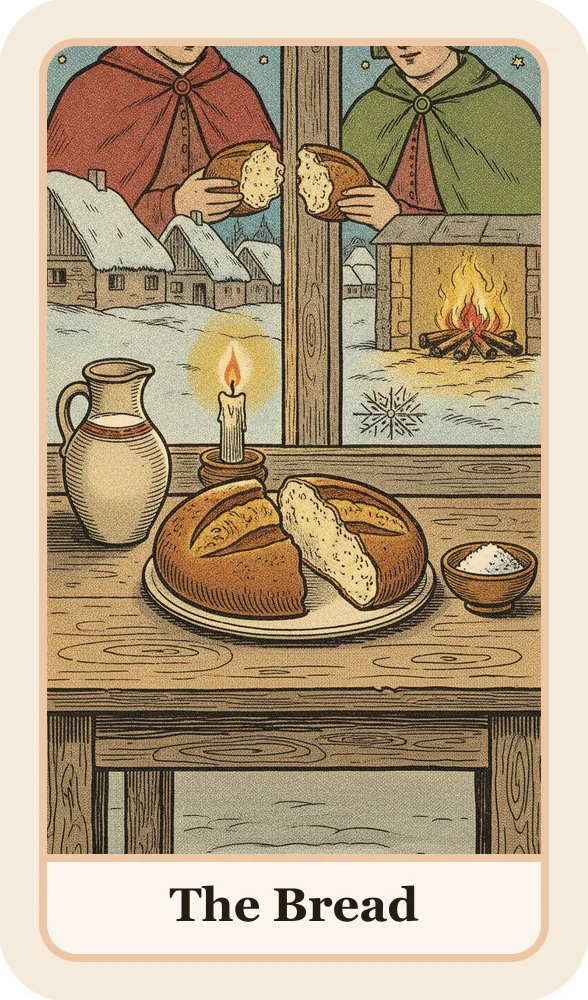 The Bread
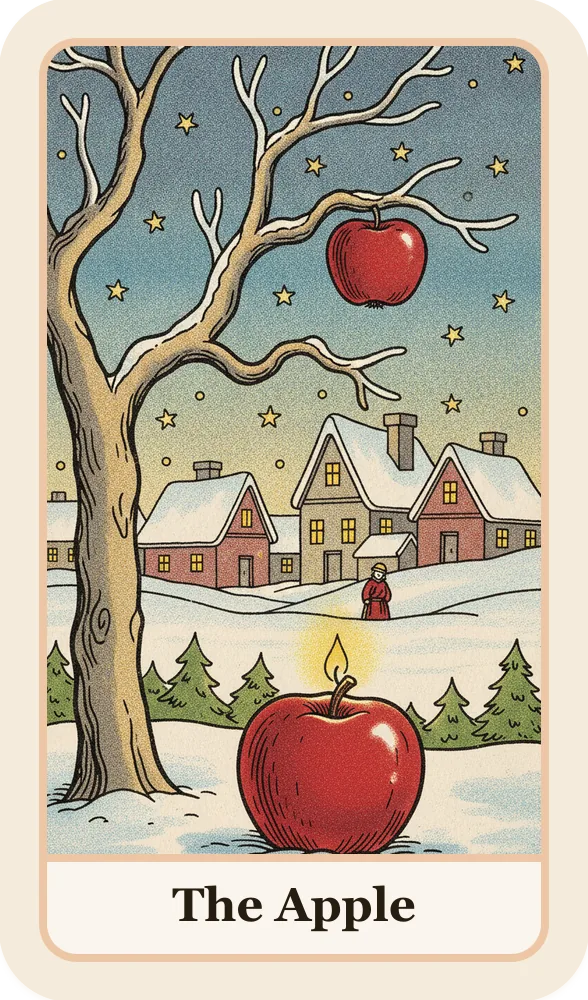 The Apple
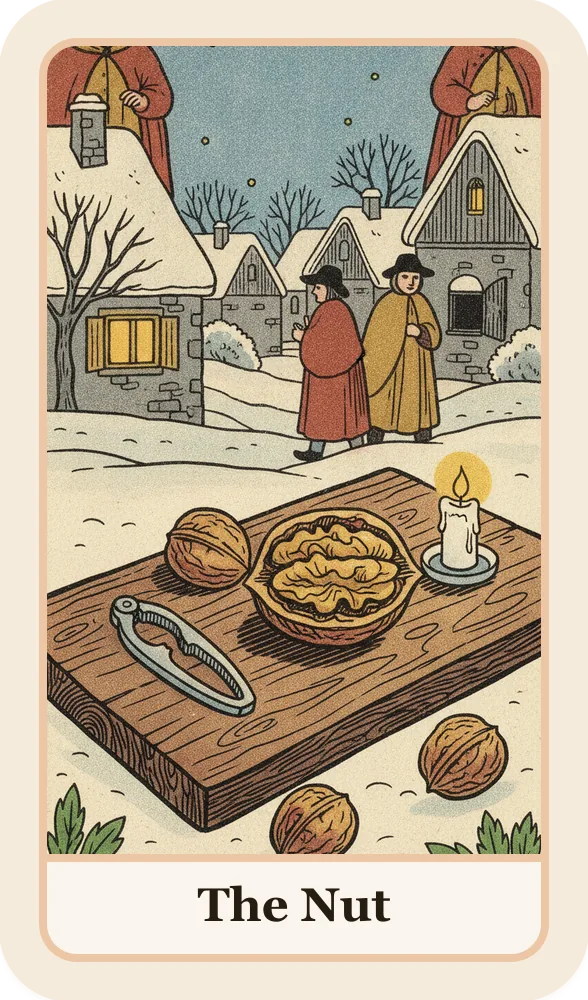 The Nut
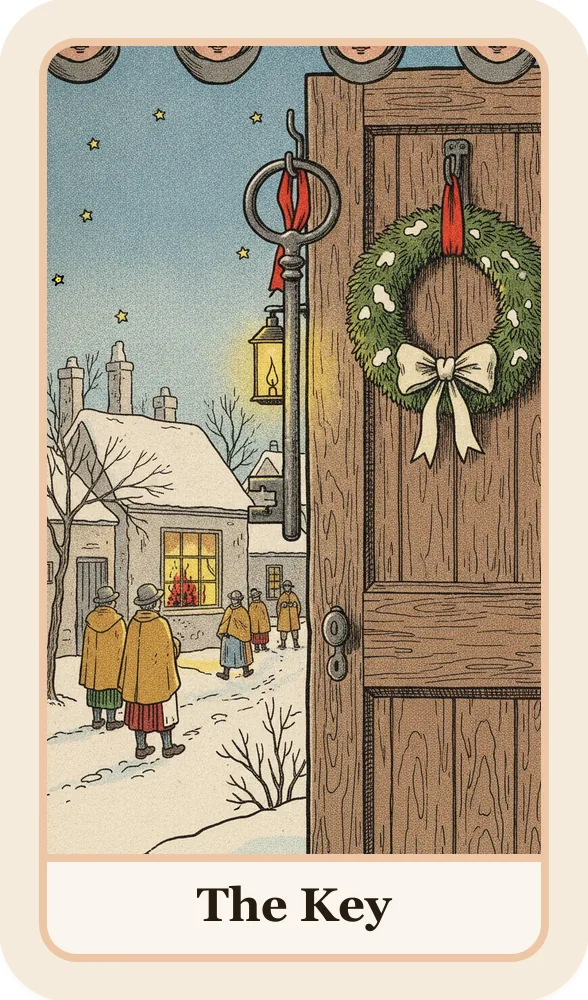 The Key
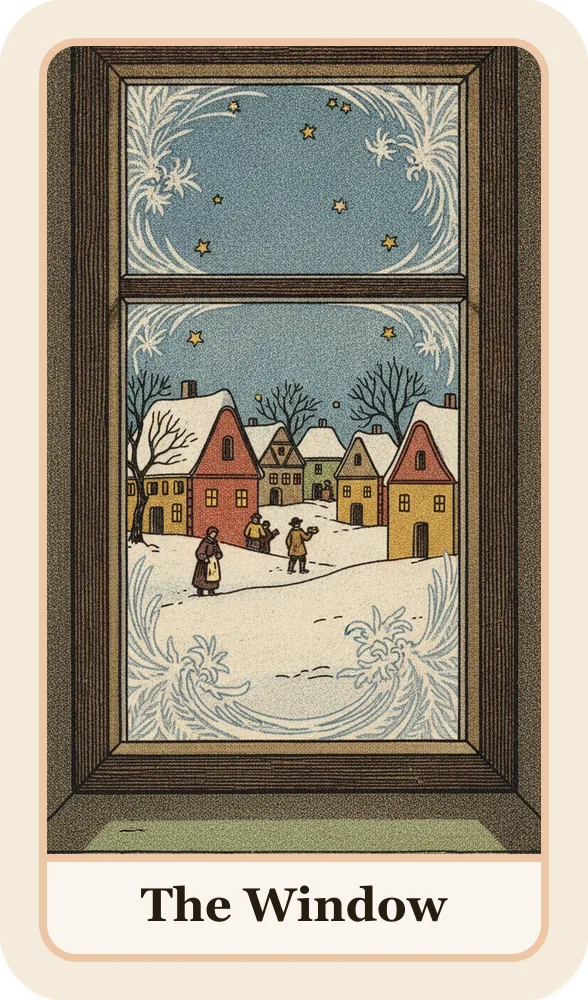 The Window
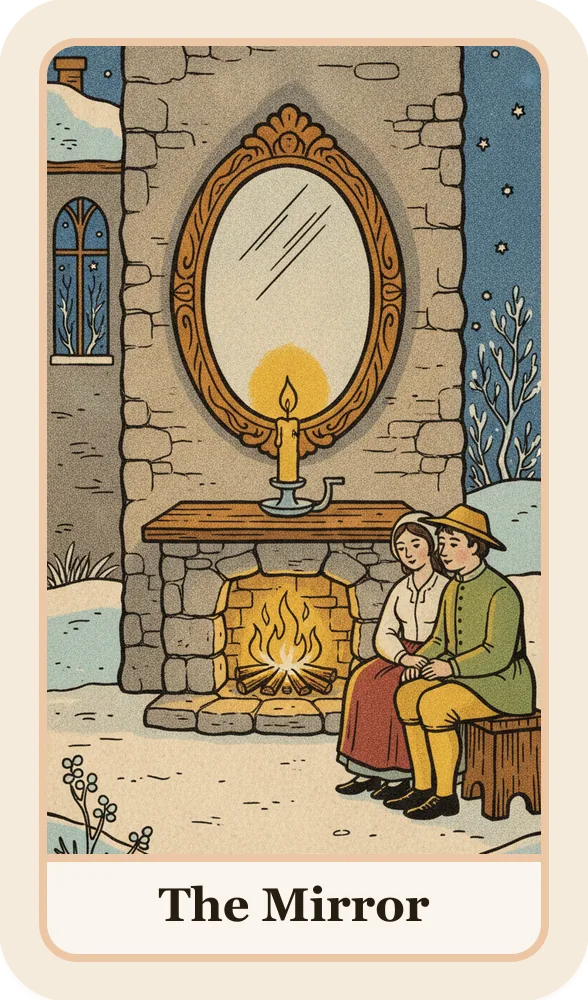 The Mirror
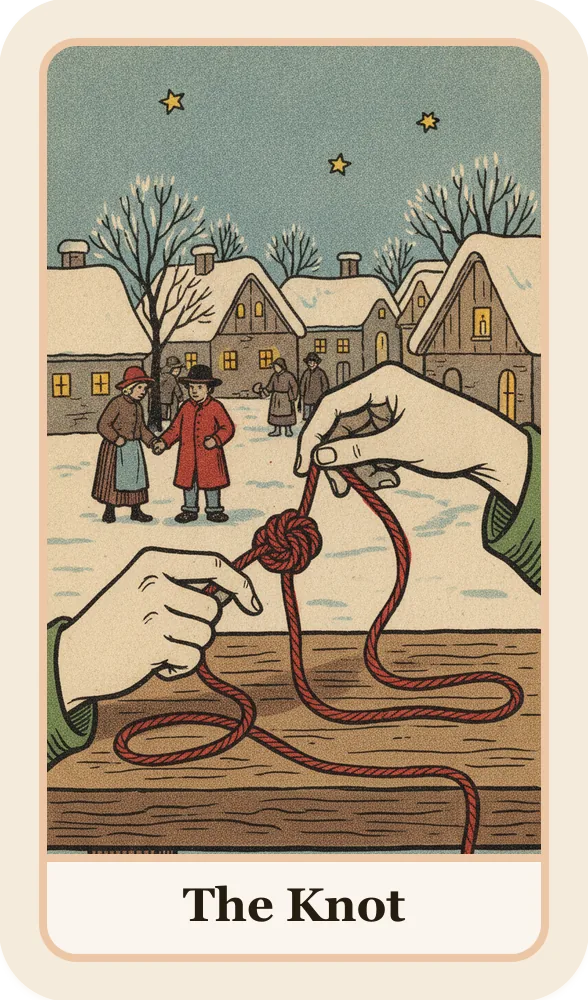 The Knot
 The Bell
 The Winter Moon
 The Returning Light
 The Long Night
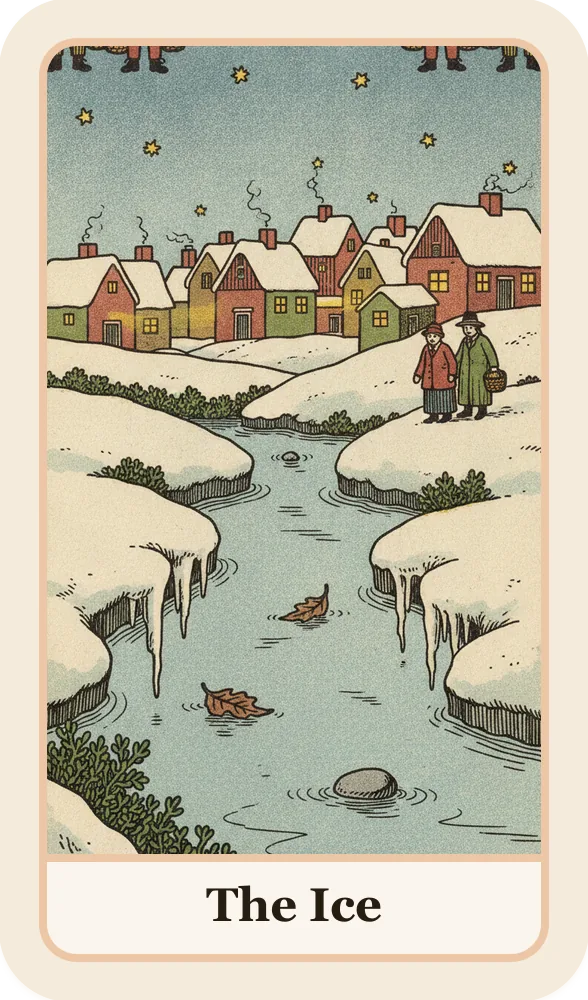 The Ice
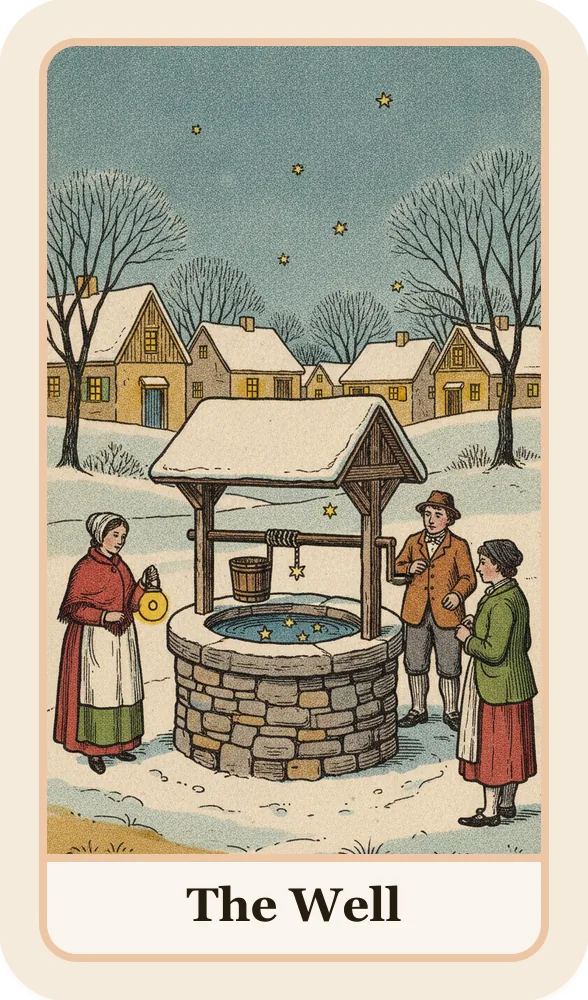 The Well
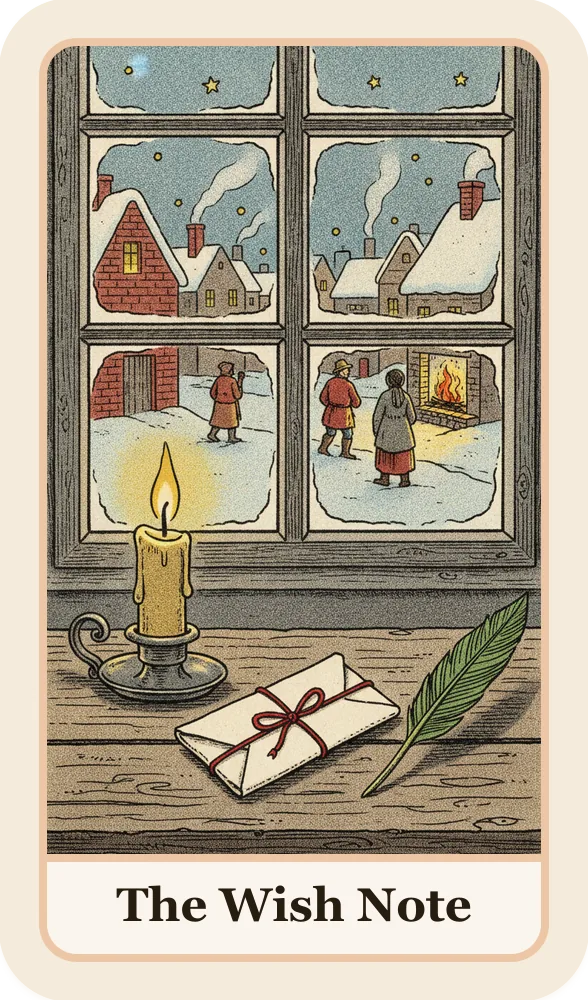 The Wish Note
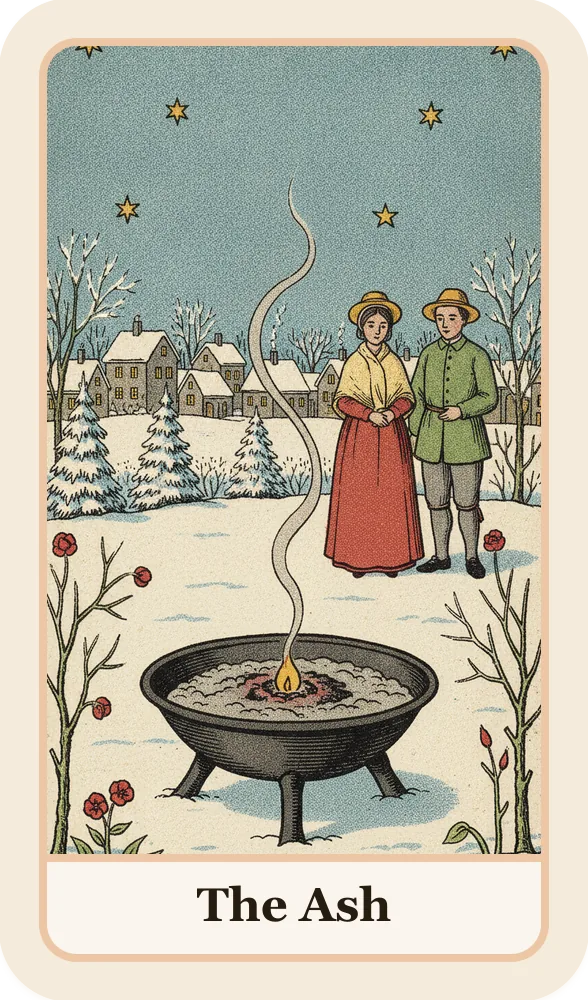 The Ash
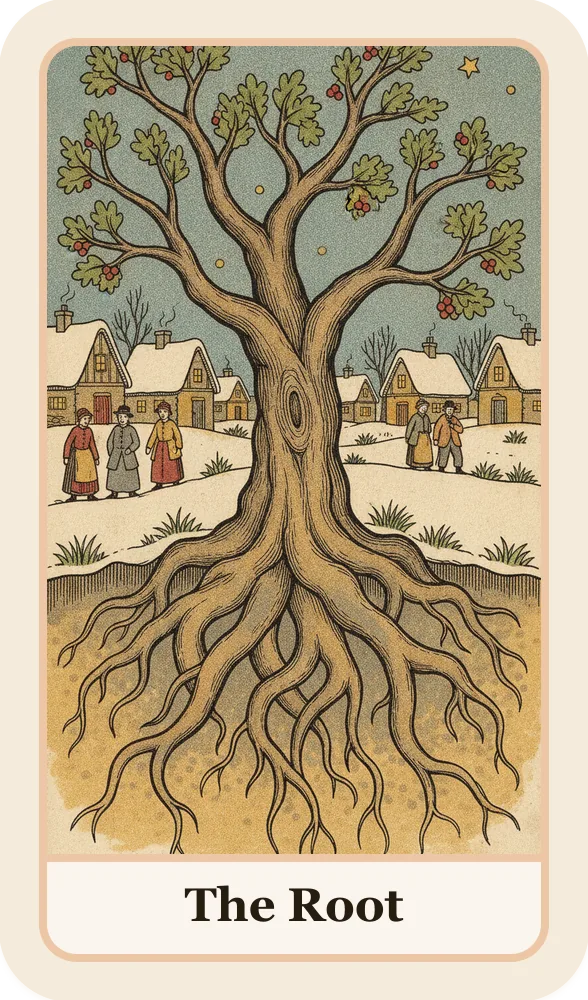 The Root
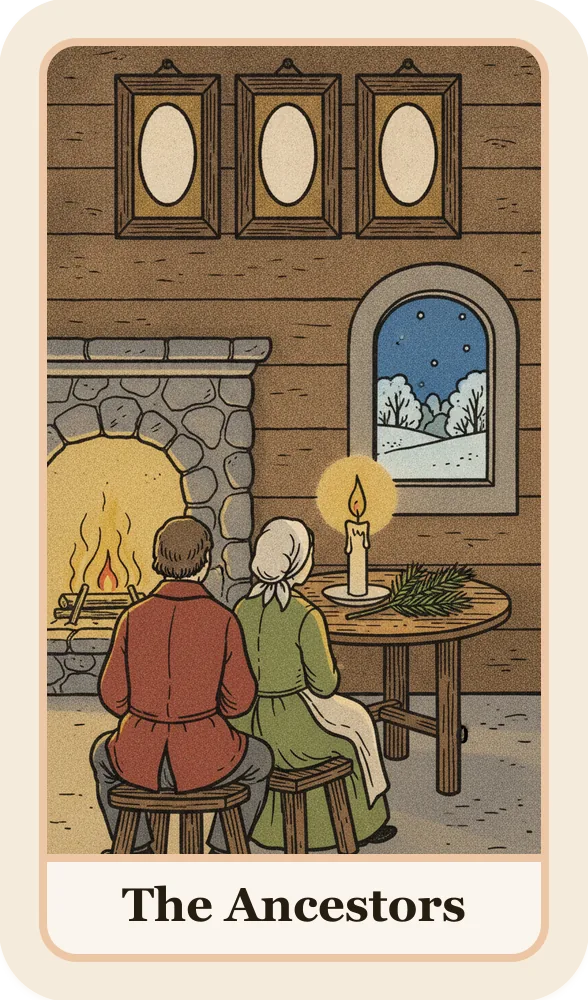 The Ancestors
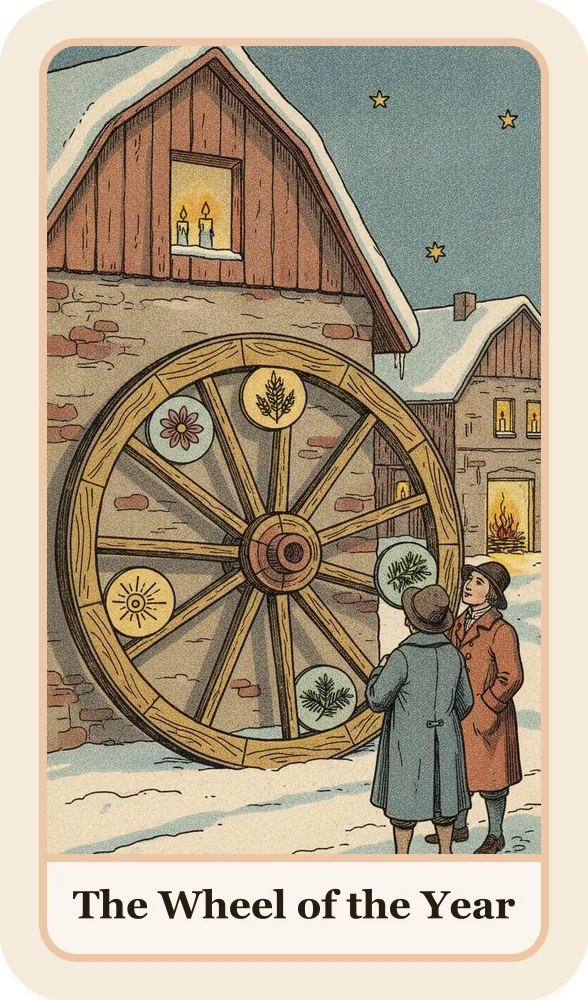 The Wheel of the Year
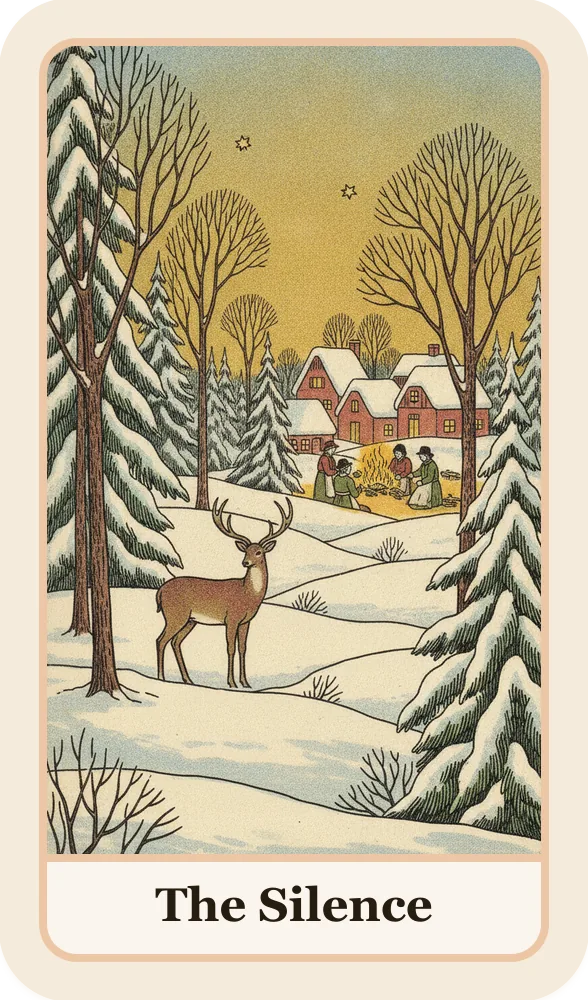 The Silence
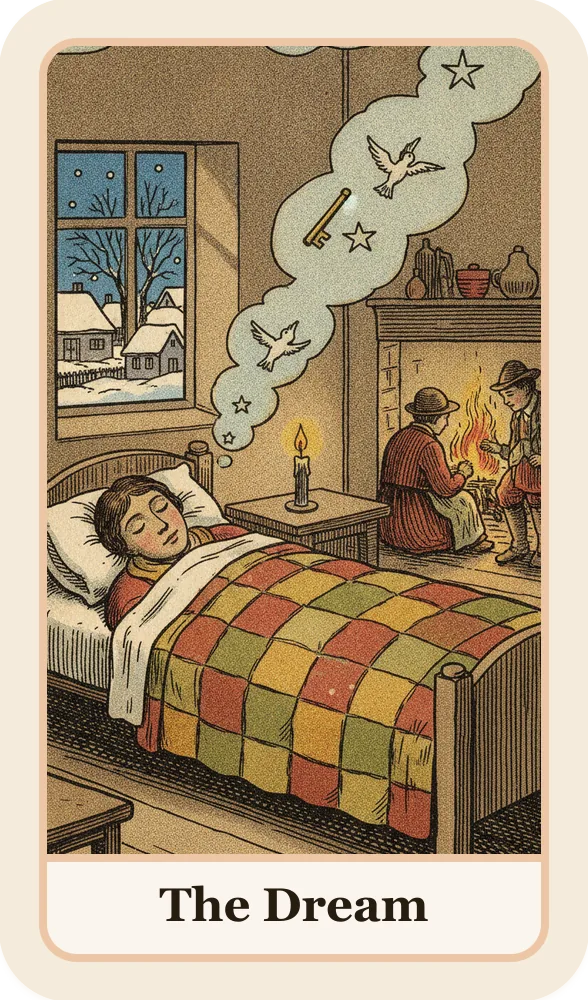 The Dream
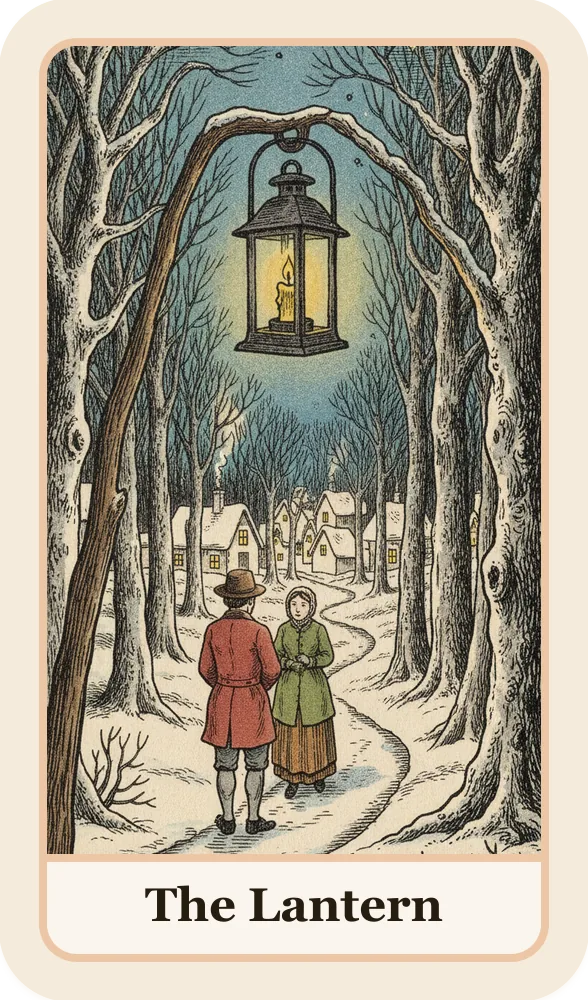 The Lantern
How often does a given card turn up in “Rauhnacht spread for tonight”?
With 3 cards out of 36 Rauhnächte cards, every single card is in your spread with 8.3 %. Lay it every day for a week and a given card shows up at least once with 45.6 %, within a month with 92.6 %.
Until you have seen each of the 36 cards at least once takes 49 days on average. The last missing cards take the longest, because fewer new ones are left each day.
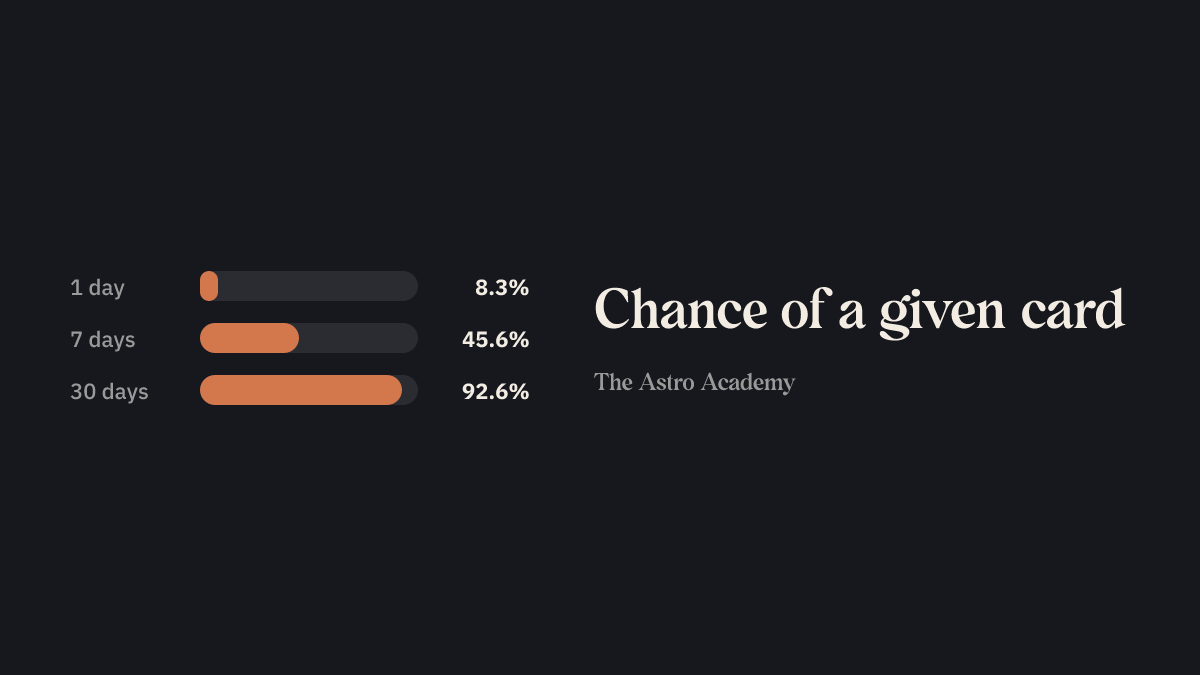
| Case | Value |
|---|---|
| Cards in the deck | 36 |
| Cards in the spread | 3 |
| Chance per card and spread | 8.3 % |
| At least once in 7 days | 45.6 % |
| At least once in 30 days | 92.6 % |
| Two given cards on consecutive places | 0.32 % |
| Days until every card was laid once (mean) | 49 |
Pure probability: every card equally likely, every spread freshly shuffled, no card twice in one spread. The mean until every card was laid is computed exactly over all intermediate states.
Keep exploring
Frequently asked questions
- When are the Rauhnächte 2026/2027?
- The Rauhnächte 2026/2027 begin on the night of December 25, 2026, and end on the morning of January 6, 2027. This period covers twelve nights. While this is the most common timing, some regional traditions start the count earlier, on December 21.
- Which Rauhnacht stands for which month?
- Each of the twelve nights corresponds to one month of the coming year in sequence. The first night, from December 25 to 26, stands for January. The second night represents February, the third March, and so on, until the twelfth night from January 5 to 6, which stands for December.
- What should you not do during the Rauhnächte?
- Traditional folklore advises against a few things to maintain peace and quiet. The most common rule is not to hang white laundry out to dry, as it was believed the Wild Hunt could get caught in it. Other customs suggest avoiding card games, leaving doors open, or doing heavy work to honor the stillness of this time.
- Can I start observing the Rauhnächte later?
- Yes, absolutely. Since this is a personal practice of reflection, you can adapt it to your own schedule. If you miss the first few nights, you can simply begin when you have the time. The goal is to create a quiet space for yourself, not to follow strict rules.
- What is the Wild Hunt?
- The Wild Hunt is a myth from European folklore about a ghostly group of hunters and hounds riding across the winter sky. They were often seen as a sign of coming change or turmoil. In Rauhnacht traditions, people would stay inside and keep things quiet to avoid attracting their attention.